

Nga: Irakli Koçollari Rilindja dhe arti i Rilindjes
Piktorët e mëdhenj të Rilindjes italiane i ofruan historisë së artit dhe bashkë me të historisë së shoqërisë njerëzore jo vetëm mjeshtërinë e madhe të krijimit, teknikave, zhanreve të reja, por edhe filozofinë e madhe të artit të ri; përcollën mesazhe të rëndësishme për gjeneratat që do të vinin dhe ndryshonin botën. Arti i tyre vendosi për herë të parë në qendër të krijimit, humanen, duke shtyrë përmes stuhisë së kurajës krijuese një epokë të re që do të vinte ndesh me tërë traditën konservatore të shekujve pararendës dhe shpallur botërisht epokën e humanizmit.
Subjektet e muraleve marramendëse shkuan përtej të njohurës duke ofruar imazhe mahnitëse, personazhe dhe ngjarje tronditëse, të së shkuarës, por edhe bashkëkohëse, heronj dhe profetë, filozofë dhe mëkatarë, ekzekutorë dhe të ekzekutuar, rebelë, kryengritës dhe të nënshtruar. Të gjitha ata qëndrojnë aty, në planet ballore apo dytësore të veprave të artit. Prej shekujsh ato vazhdojnë të komunikojnë me gjenerata të tëra gjer në ditët tona, me ne spektatorët, vizitorët dhe nxënësit e përjetshëm të mjeshtrave të mëdhenj të asaj epoke.
Në to janë ngjizur aleanca dhe konflikte, tronditje politike dhe religjioze, figura të njohura dhe personazhe me rëndësi historike apo të tjerë anonimë, që ende nuk i njohim apo nuk dimë ç’thonë. E gjithë ajo mori e pafund skenash, personazhesh, lëvizjesh, gjestesh, vështrimesh, planesh, përcjell mesazhe të pafund. Disa i kemi kuptuar, të tjerat qëndrojnë në mënyrë sfiduese dhe lutëse përpara nesh për të rrëmihur brenda heshtjes së tyre domethënëse dhe zgjidhur enigmat.
Dhe, ndodh, që në këto sfida, në përpjekjet për të gjetur të fshehtat e heshtura që qëndrojnë nëpër shekuj mes kryeveprave të artit të Rilindjes, të identifikohen skena apo personazhe të panjohur, të cilat zbulojnë enigmat shekullore dhe të shpjegohen kështu skenarët e tablove të hershme.
Sigurisht, një rast i tillë është çasti i ngazëllimit të madh njerëzor. Një ngjarje të tillë trajtojmë edhe ne në rreshtat e këtij shkrimi!

Shqiptarët në Evropën mesjetare
Epoka e artit të madh - Rinashimentos, të shekujve të XIV-XV - përkon me ngjarje të mëdha, komplekse politike dhe ushtarake, filozofike, shkencore, me zbulimet e mëdha gjeografike, astronomike, fizike, anatomike, etj., në Evropë dhe më gjerë.
Por, epoka e madhe e Rilindjes përkon me ngjarje të mëdha tronditëse edhe për trojet arbërore! Ishin dekadat dhe shekulli kur arbrit çapiteshin krah ritmeve perëndimore, zgjeronin kontaktet intensive me ta, rrisnin këmbimet tregtare, politike por edhe kulturore etj. Por, në këto dekada, të fundit të shekullit XIV, fatkeqësisht, bota e arbrit do të kërcënohej fatalisht nga invazioni i përgjakshëm barbar osman. Rezistenca e popullsisë shqiptare ishte e gjatë, e përgjakshme dhe mbresëlënëse. Kudo ku arbrit ndodheshin, brenda kufijve të Arbërisë mesjetare apo edhe përtej, në kalvarin e emigrimeve nëpër Evropë, ata do të qëndronin fort përballë invadorëve lindorë dhe do të luanin një rol të rëndësishëm në fatet e popujve të këtyre anëve.
Në frontet e luftërave në trojet arbërore, në Ballkan apo nëpër Evropë ku ata emigruan, u identifikuan si luftëtarë të rrallë, me kurajë unike, me emrin e njohur “Stradioti Albanesi”. Repartet e tyre u kthyen në njësi ushtarake elitë, në formacione që vendosnin fatet e luftimeve në fushëbeteja. Shumë nga komandantët “di stratioti Albanesi” u bënë figurat e luftëtarëve dhe strategëve më të njohur në Evropë, morën emër, tituj, grada, dekorime dhe flamuj si rrallëkush në historinë e mesjetës. Mërkur Bua (Gjenerali më i dekoruar në historinë e Evropës mesjetare), Krokodil Kladha (kryengritës në territoret e tre popujve, për 40 vite me radhë), Gjergj Basta (strategu i rreth 90 betejave të fituara në fronet e Evropës, teoricien dhe autor i disa traktateve teorike militare), kapostratiotët Buziqi, Maneshi, Muriqi, Meksi, Kelmendi, Bohali, Peta, Shpata, Këmbëthekra, Koroveshi, Gjerbësi ... Petro Bua ... dhe bëmat e tyre mbushin raftet e pafund të arkivave mesjetare.
Pikërisht, këto personazhe, për shkak të bëmave dhe gjurmëve që ata lanë, emocioneve që ata krijuan në botën e trazuar evropiane, tërhoqën vëmendjen, emocionuan dhe u bënë subjekt i shumë krijimeve në artin e Rilindjes italiane. Piktorë dhe mjeshtër të mëdhenj të artit, si Xhentile Belini, Lorenzo Lotto, Vitorio Karpaço, Pinturekio dhe dekada më vonë Eugen Delakrua, Camille Corot, Leon Gerome, etj., vunë në fokusin e penelit apo të grafitit fushëbetejat e stratiotëve shqiptarë. Aktet e tyre mahnitëse apo portretet e atyre burrave të shquar u kthyen në simbole shprese për popuj dhe fatet e tyre. Një ndër ta dhe ndoshta luftëtari (statioti) më i adhuruar edhe në botën latine është Petro (Pjetër) Bua.
Petro bua, stratioti shqiptar i adhuruar ne artin italian
Vitet e fundit, në fondet e veprave të artit të Rilindjes italiane është identifikuar një grafikë e bukur e panjohur më parë e këtij stratioti, Petro Buas, një komandant i njohur i reparteve shqiptare, i cili krijoi një emër të madh sa në ndeshjet e tij në frontet e luftërave antiosmane në trojet e Ballkanit, në Peloponez, por edhe nëpër territoret e Italisë dhe më gjerë në Evropë.
Grafika e gjetur është punuar nga piktori i njohur i Rilindjes italiane, veneciani Xhentile Belini (Gentile Bellini).
Po kush ishte Petro Bua (Shpata) që tërhoqi vëmendjen e mjeshtrit të madh Italian të pikturës?
Rënia e Kostandinopojës dhe qëndresa e shqiptarëve
Në kohën që Kostandinopoja përpëlitej nën grahmat e fundit të shpirtit të saj (1453) dhe perandori i Bizantit (Dhimitër dhe Thoma Paleologu) kishte marrë arratinë në Mistra të Peloponezit, për t’u larguar përfundimisht edhe prej këtu, drejt Italisë, askush nuk e dinte se çdo të ndodhte me gadishullin e Moresë (Peloponezin) dhe popullsinë e tij.
Kush do të ishte tanimë autoriteti që do të merrte kurajën t’i bënte thirrje dhe të udhëhiqte popullin në luftërat e përgjakshme kundër invazionit osman? Peloponezi dhe Greqia nuk kishte askund më një autoritet tillë!
Fatkeqësisht, historiografia greke hesht për këtë çast fatal të perandorëve grekë të Bizantit! Pikërisht, në këto kohë tmerri, shfaqet Petro Bua një shqiptar i Peloponezit, i cili kërkon prej shqiptarëve të këtyre anëve (të cilët ishin një popullsi mazhoritare ato kohë në Peloponez), të zgjedhin udhëheqësit e tyre! Dhe shqiptarët e bënë këtë. Historia e shkruar për këto ngjarje konsideron këtë akt si një revoltë apo kryengritje, kur në fakt pikërisht ata, shqiptarët, po e vlerësonin largimin e palavdishëm një dështim të plotë dhe përfundimtar të despotëve grekë.
Historiani bizantin dhe bashkëkohës i ngjarjeje, Sfranzes, shkruan qartë se “në fakt në këto kohë të gjithë Shqiptarët e Moresë ishin në revoltë dhe kryengritje. Ndërkohë, ushtarakët venecianë, sipas dokumenteve të Arkivit të Venedikut, sqarojnë se “këta kryengritës kishin një fuqi prej tridhjetë mijë luftëtarësh”.
Historiani tjetër bizantin i kohës, Leonik Halkokondili, i identifikon këto ngjarje me rolin dhe praninë e një figure të rëndësishme, atë të shqiptarit Petro Bua, duke e karakterizuar atë si “një burrë të ashpër dhe me sjelljet e një të pabinduri (nënkupto - të panënshtruari)” - karakteristikë të cilën historianët grekë e kanë pranuar si të mirëqenë dhe pa ia nënshtruar asnjë analize, vetëm për faktin se Petro Bua ishte një shqiptar.
Por, ndryshe nga Halkokondili, venecianët e shumtë që e njohën nga afër Petro (Pjetër) Buan na ofrojnë të tjera konsiderata, duke nënvizuar për të se ai ishte një “burrë me karakter të pastër dhe kurajoz, luftëtar i vendosur”.
Gjenealogjia e shqiptarit Petro Bua
Petro Bua rridhte nga familja e njohur e princit shqiptar Gjin Bua Shpata. Stërgjyshi i tij ishte pikërisht ai zoti i njohur i trevave të Arbërisë jugore, Artës, Ahaisë etj. Në fakt, mbiemri i familjes së tij ishte Bua, por sikundër bën me dije historiani grek i shekullit të kaluar, K. Biris, titulli “Shpata” ju dhurua Buajve nga princi i njohur shqiptar, Karl Topia, aso kohe zot i Durrësit dhe Arbërisë qendrore. Kjo ndodhi mbasi tre princat shqiptarë, Gjin Bua Shpata, Karl Topia dhe Gjin Zenebishi në aleancë me njëri-tjetrën fituan betejën e përgjakshme kundër aleancës bizantino-turke-fiorentinase në Angjelokastër - Etoli, Akarnani.
Vite më vonë Pavlo Bua Shpata, gjyshi i Petro Buas, gjendet i vendosur në Peloponez mbasi kishte dorëzuar Nafpakton venecianëve. Fill mbas këtyre ngjarjeve, duket që familja fisnike e Shpatajve gjendet përfundimisht në Peloponez dhe Atikë (Greqi), së bashku me një numër të madh shqiptarësh, emigrim që aso kohe perandori i Bizantit, Manueli i II, i mbështeti.
Aty nga mesi i shekullit të XV, një nip i Pavlo Buas, Petro Bua, shfaqet në Peloponez si kreu i fisit, madje edhe i një feudi të madh.
Ai shfaqet në arkivat veneciane, si komandanti i vetëm në radhën e princave të Peloponezit që nuk kishte pranuar të nënshkruante nënshtrimin ndaj Sulltan Muratit, pra që nuk kishte pranuar pushtimin!
Mbas rënies së Kostandinopojës dhe vdekjes së perandorit bizantin Kostandin Paleologut, më 1453, shqiptarët e Moresë (“albanesi di Morea”) të udhëhequr nga Petro Bua u ngritën në revolta të armatsura kundër dy Despotëve të Moresë, Thoma dhe Dhimitër II, për tributet e mëdha të papaguara prej tyre. Edhe në vitet në vazhdim kjo forcë e madhe shqiptarësh prej 30 mijë vetësh nën komandën e Buas, vazhdoi qëndresën e përgjakshme kundër pushtuesve osmanë nëpër fushëbeteja duke e mbajtur Morenë për vite të tëra të lirë dhe panënshtruar nga pushtuesit osmanë. Tridhjetëmijë luftëtarë shqiptarë e konsideronin atë si udhëheqësin e tyre.
Në vitin 1459, Petro Bua shfaqet përsëri në dokumentet veneciane, madje ato e përcaktojnë ato si ”kapo” të të gjithë shqiptarëve kryengritës të Moresë. Jo vetëm kaq, por ai së bashku me tjetër kryengritës, Manuel Ralin, gjendet në një listë që së bashku ne dymbëdhjetë princa të tjerë luftojnë në krah të venecianëve në Isthm, në gusht të vitit 1463. Nga viti 1464 dhe gjer në vitin 1467, Petro Bua gjendet edhe më tej në shumë dokumente veneciane që pasqyrojnë beteja dhe luftime të pandërprera në frontet antiosmane.
Në radhën e po këtij dokumentacioni gjenden edhe dorëshkrime të vetë atij, çka tregon kulturën e këtij shqiptari të dëgjuar. Petro Bua nuk kishte djalë dhe për këtë arsye Venediku për kontributet e tij, si komandant i suksesshëm në shumë fronte të luftërash të Venedikut, i njohu si djem tre nipat e tij Nikollën, Petron dhe Kondotjerin Mërkur Buan, një tjetër luftëtar të famshëm, ndoshta gjenerali më i dekoruar në frontet e luftërave të Evropës.
Në vitet në vazhdim, i ftuar nga venedikasit, Bua bëri të paktën tri udhëtime në Venecie si aleat i tyre dhe së bashku me ta ai mori pjesë me trupat në një sërë fronte betejash, duke lënë impresione të thella në sytë e latinëve. Për meritat e tij të veçanta në luftërat e vazhdueshme dhe rezistencën antiosmane, si dhe kontributet në aleancat venedikase, në 1476, Senati Venedikas e priti atë me nderime të veçanta në Pallatin e Dozhëve “dhe i dorëzoi atij një shpërblim të madh në para”.
Në 1478, përsëri Dozhët me vendim e shpallën atë “Kalorës nderi” dhe i dhanë sipas protokollit të veçantë një mantel të punuar në ar, në ngjyrë të kuqe”.
Por, fama dhe emri i Petro Buas ka qenë mjaft i përhapur për bëmat e tij, jo vetëm në kohën që ai jetoi, por edhe në dekadat që pasuan. Kështu, në poemën e njohur të shqiptarit Manol Blesi, botuar në vitin 1561, të titulluar I Fatti e le Prodezze di Manoli Blessi, Strathioto, dhe në të dytën titulluar Barzaletta – de Quattro compagni de Albania zuradi de andar per il mondo alla ventura, capo di loro Manoli Blessi da Napoli di Romania, ne gjejmë vargje dedikuar stratiotëve të njohur arbërorë (albanesi) që luftuan për vite me radhë në territoret italiane dhe më gjerë nëpër Evropë. Mes tyre autori rendit edhe Petro Buan, si një kapostratiot, që sigurisht kishte lënë gjurmë në frontet e luftërave në ato anë. Në këto vargje Blesi shkruan:
Ku është Shtino dhe Kanaci?
Meksi, Lopsi dhe Barbati?
Po Andruc mustaqegjati?
Petro Bua dhe Stamati?
Në periudhën e viteve 1467 dhe gjer në vitin 1489, Petro Bua si një komandant i stratiotëve shqiptarë bëhet një ndër figurat më të njohura të luftëtarëve të dalluar në Republikën e Venedikut dhe më gjerë në opinionin Italian.
Mbas vitit 1501 ai nuk përmendet më në dokumentacionin arkivor apo nga burime të tjera, çka nënkupton se në moshë të thyer ai duhet të ketë vdekur.
 Skica e Petro Buas nga Xhentile Belini (1480)
Piktori Xhentile Belini dhe stratioti shqiptar Petro Bua
Sigurisht, tek një luftëtar i tillë, ku qenë kthyer sytë e shpresës të shumë njerëzve në Ballkan e më gjerë, në Venecia, në Ishujt Jonianë, bregdetin Dalmat, etj., nuk kish si të mos kthehej vëmendja, bashkë me të adhurimi dhe frymëzimi i artistëve të kohës, për më tepër në hapësirat e Rinashimentos.
Dhe vërtet, ishte piktori i famshëm i Rilindjes Italiane, Xhentile Belini [Gentile Bellini] ai që punoi atë skicë të detajuar dhe mjaft të bukur, të kapedanit Petro Bua, që është gjetur vitet e fundit. Bua qëndron në këmbë, me një pelerinë (mantel) mbi supe, që i ngjan një tallagani apo gune të traditës së komitëve shqiptarë. Ai ka një pozicion sfidues, gjysmë të kthyer, me një sup më të ngritur se tjetri, mbi të cilin mban peshën e pelerinës, me vështrim të drejtuar ballazi mbi atë që punon portretin e tij, i vrenjtur, pse jo kërcënues, me mustaqe të gjata dhe një kësulë karakteristike në kokë.
Ne ende nuk dimë ku e takoi piktori i njohur italian heroin shqiptar të fushëbetejave!? Kush ia prezantoi dhe ja solli piktorit këtë shqiptar për ta punuar? Nuk dimë, gjithashtu, nëse skica ishte thjesht dhe vetëm një punim i mjeshtrit apo bashkë me të ajo do t’i ketë shërbyer piktorit si një bocet për ta hedhur mandej në telajo me ngjyra? Nëse e punoi me ngjyra, ku mund të ndodhet ajo, nëpër galeri apo pinakoteka personale? Nuk dimë gjithashtu nëse piktori punoi vetëm këtë variant apo edhe skica të tjera të Petro Buas? Këto dhe shumë dilema mbeten ende të panjohura dhe pa përgjigje.
Një e papritur befasuese dhe ngazëlluese!
Duke vizituar para pak kohësh fondet e artit të rilindjes italiane dhe monumentet ku qëndron një pjesë e madhe e tyre, papritur për habinë tonë, hasëm në Katedralen e qytetit të Sienës në Itali, në sallën maxhore të saj, në një prej muraleve qendrore të titulluar “Debati i Shën Katerinës”, punuar në vitin 1491, një figurë që vështron në mënyrë sfiduese i kthyer me vështrim nga vizitorët, sikur të komunikojë me ta!
Për çudinë tonë konstatuam se ky personazh qendror i murales ishte i njëjti personazh, me atë të skicës të punuar nga Xhentile Belini! Ai ruan të njëjtin pozicion, të njëjtën pelerinë, një sup më të ngritur se tjetri, njëra dorë e mbuluar nga pelerina tjetra, ndërsa tjetra, dora e majtë e lëshuar në pozicion të lirë. Është i njëjti portret, i burrit me vështrim sfidues, me mustaqe, krenar pse jo kërcënues… Tiparet e fytyrës janë po ato që gjenden në skicën e Belinit! Pra, është i njëjti njeri...! Është vetë shqiptari Petro Bua!
Por, tanimë, Petro Bua në këtë kompozim mural është punuar me ngjyra, në përmasa të mëdha dhe manteli që ai mban hedhur mbi supe duket qartë që është në ngjyrë të kuqe, i punuar në ar. Pra, është ai mantel që i dhuruan Dozhët e Venedikut, një veshje fisnikërie që nuk e kishte kushdo, por vetëm njerëz të paktë të rangjeve të larta dhe të nderit të veçantë.
Kjo tablo është punuar nga një tjetër piktor i famshëm i rilindjes italiane, Bernardino di Betto di Biagio, apo ndryshe i njohur në tërë botën e artit me nofkën Pinturiku, sikundër e shkruante ai vetë emrin dhe firmën e tij! Ndërsa në literaturën e shkruar për të, gjendet me emrin Pinturikio.
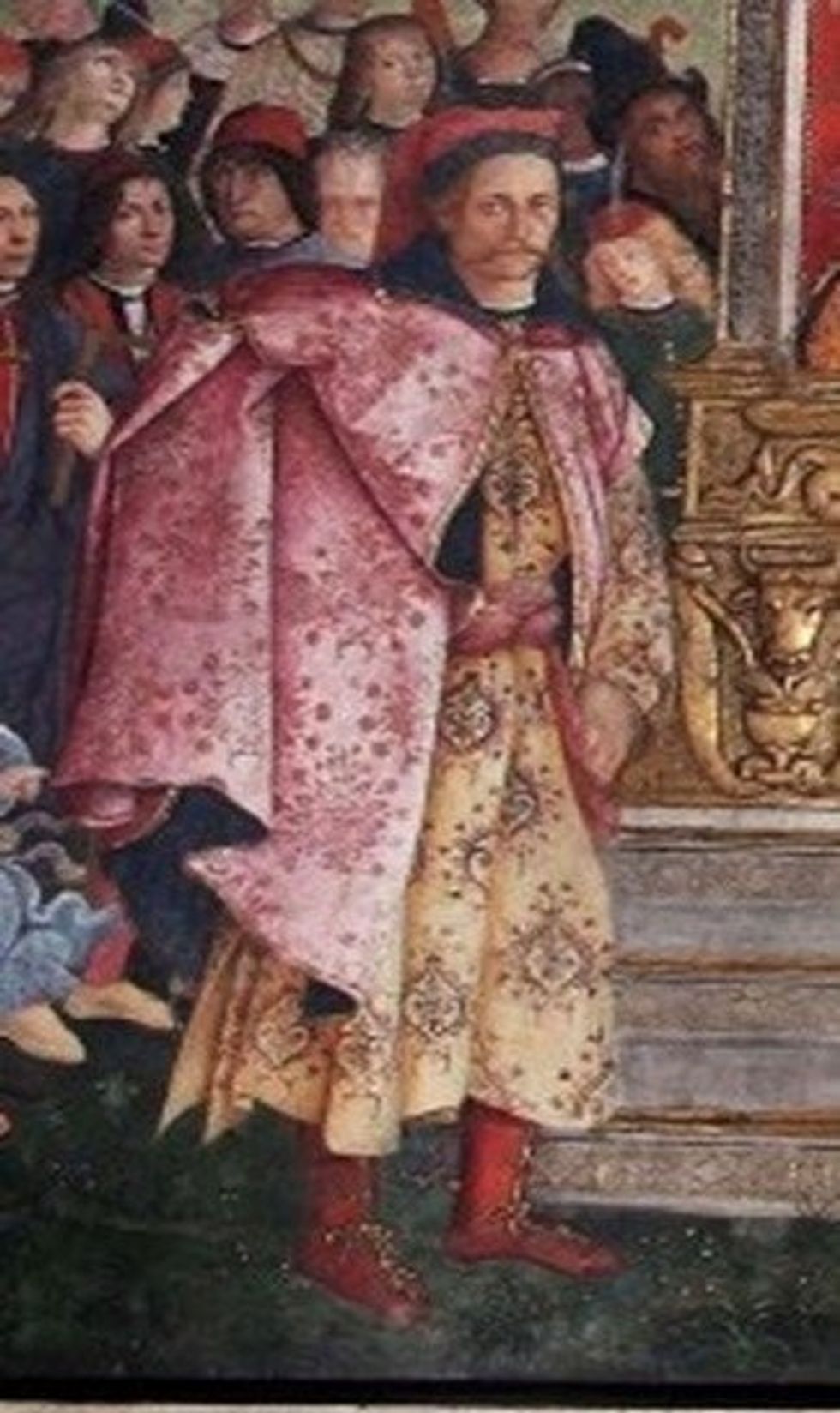 Tabloja e Pinturekios
Nuk dimë, nëse Pikturiku e njohur vetë, personalisht, luftëtarin shqiptar Petro Bua, apo ai e punoi atë mbështetur në skicën e njohur të Bellinit?! Nëse është kështu, nuk dimë gjithashtu se si dhe në ç’rrethana Pikturiku mori të drejtën e riprodhimit të skicës së Belinit, në një murale të rëndësishme dhe përjetësuar atë në Katedralen e Sienës?!
Në muralen e Pinturekios gjenden edhe figura të tjera, por ajo që tërheq vëmendjen është e një turku me turban në kokë. Nga verifikimet mësohet se ai është vëllai i Sulltan Muratit - i njohur me nofkën “Pushtuesi’. Ai kishte miqësi me Dukën e Sienës dhe kishte vizituar këtë qytet disa herë në ato vite. Siç shihet qartë edhe në tablo, turku ka ngulur vështrimin e tij mbi shqiptarin Petro Bua, kundërshtari gjer në vdekje i perandorisë Osmane, njeriu që luftonte për lirinë e popullit të tij të robëruar. Belini ka punuar një skicë edhe të këtij vizitori lindor të papranueshëm për Petro Buan.
Edhe personazhe të tjerë në këtë tablo kanë kthyer sytë nga luftëtari shqiptar çka tregon se ai kishte tërhequr vëmendjen e opinionit latin. Tabloja flet shumë edhe me mjaft detaje të tjera që ajo ofron..
Sidoqoftë, në Katedralen e Sienës tanime në kemi imazhin e plotë të një shqiptari të famshëm të viteve 1460-1480, të një luftëtari që la gjurmë në frontet e luftërave dhe zhvillimet politike, në rajonin e Ballkanit e më gjerë në shekullin XV.
Pse jo, kjo është një arsye më shumë që Katedralja e Sienës të jetë një atraksion unik për t’u vizituar nga shqiptarët, duke shpresuar që të tjera vlera të panjohura të shqiptarëve do të gjenden në tokën dhe artin Italian, me të cilin vendi ynë ka pasur lidhje dhe këmbime të hershme tradicionalisht. /ExLibris/