


As tourism continues to grow across Europe and become a major pillar of many countries' economies, social tensions between the sector and local communities are increasingly emerging. The problems are mainly related to access to housing, rising rents and the general cost of living in the most visited cities .
In many tourist destinations, especially in historic and coastal cities, the increased demand for short-term accommodation has led to a large proportion of housing being converted into tourist apartments. This has led to a reduction in supply for local residents and, as a result, a significant increase in rental prices. For many families, especially young people and those with middle or low incomes, this is making it increasingly difficult to afford living in their cities, reports the Telegraph.
Meanwhile, the costs of basic services and products in tourist areas are also rising, driven by high seasonal demand and the orientation of the local economy towards foreign visitors. This situation has fueled growing dissatisfaction among residents, who often feel marginalized in the cities where they live, while the economic benefits of tourism are not distributed equitably.
As a result, public reactions and protests against "excessive tourism" are also being observed in some European countries, with calls for stricter regulation of the short-term rental market and policies that protect local residents, euronews writes.
In this context, the question is increasingly being asked: which countries and cities are facing this backlash the most and how are they balancing economic development from tourism with the needs of their residents?
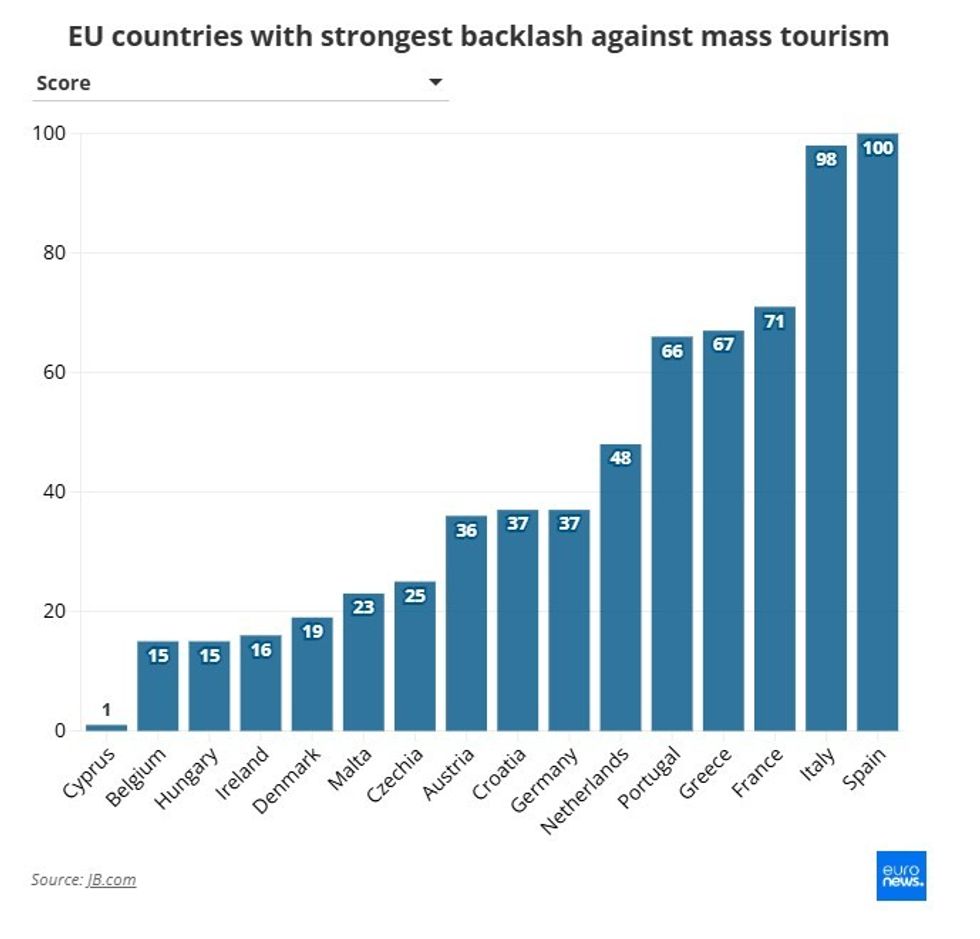
Spain, Italy and France are the three European countries where the backlash against mass tourism is most pronounced, according to a new study published by digital entertainment platform JB.com.
Official data shows a clear trend of continued growth in tourist flows, which helps explain the growing dissatisfaction of local communities.
In Spain, for example, in the first four months of 2026 alone, the number of tourists has increased by 3.4 percent compared to the same period last year. This trend is expected to strengthen further, as according to the Ministry of Tourism, the country is expected to register a 7.1 percent increase in passengers on incoming international flights during June of this year.
This rapid increase in visitor numbers, while providing a significant boost to the economy and employment, is also putting significant pressure on urban infrastructure, the housing market and the cost of living in major tourist cities. As a result, there is growing criticism of mass tourism in some regions, with calls for more balanced policies that aim to maintain a balance between economic development and the quality of life of local residents.
Italy and France are also expected to see significant increases in tourist arrivals during the month of June, by 12 percent and 2.6 percent respectively compared to the same period in 2025, according to a press release published by the Spanish Ministry of Tourism.
These figures show that, despite the debates and discontents expressed in some European cities, the demand for travel to the continent's most popular destinations remains steadily growing. This growth, however, continues to fuel discussions about the management of tourism and its impact on the daily lives of local residents, especially in areas where the number of visitors significantly exceeds the capacity of urban infrastructure.
In contrast, Cyprus and Albania rank among the most welcoming countries to visitors in Europe, according to the same JB.com report. No organized protests against tourism have been documented in these countries, while the level of regulatory pressure on travelers and the tourism sector remains relatively low. This makes them quieter destinations in terms of public debate about mass tourism, despite the continued growth of interest from international visitors.
The JB.com study analyzed a number of factors to reach these conclusions, including the intensity of anti-tourism protests, media attention to them, the level of tourist taxes, and the ratio between the number of visitors and the resident population in 30 different countries around the world.
Which cities have seen the most anti-tourism protests?
Spain, which ranks first among the 30 countries analyzed in the study, is also the country where the largest number of protests against mass tourism have been recorded. According to the data, these reactions have spread to more than 40 cities across the country, starting from Barcelona to the Canary Islands, two of the most frequented tourist destinations in Europe.
The Catalonia region, where Barcelona is located, remains one of the busiest areas in terms of international visitor arrivals. In 2025 alone, the region welcomed around 20.1 million tourists, an increase of 0.6 percent compared to 2024. After Catalonia, the other main tourist destinations in Spain are the Balearic Islands and the Canary Islands, which also face high seasonal pressure from mass tourism.
Residents’ discontent has also been expressed in visible forms of protests on the ground. In June last year, hundreds of protesters marched through the center of Barcelona, holding banners with the message “Tourism is killing Barcelona.” In some cases, the tensions were accompanied by symbolic actions, where protesters sprayed tourists with water pistols in the city’s busiest areas, as a way to draw attention to the impact that, according to them, mass tourism is having on the daily lives of local residents and on the city’s urban identity.
- YouTube www.youtube.com
Italy has also faced a wave of similar protests in some of its most visited cities, including Venice, Rome, Florence, Naples and Milan. In these areas, residents' discontent has been linked mainly to the impact of mass tourism on the housing market and the quality of urban life.
In some cases, local activists have gone even further, sabotaging key boxes used for short-term rentals. These symbolic actions aim to denounce the lack of affordable housing for residents, who are increasingly facing high prices and displacement from historic city centers.
As part of efforts to curb overtourism, Venice has reinstated a special regulatory measure, establishing specific days during weekends in April, May, June and July when day visitors are forced to pay an entrance fee.
This measure aims to better manage the large influx of tourists during peak periods and relieve pressure on the city's infrastructure.
Meanwhile, France has also seen protests in some of its major cities, including Marseille, Nice and Paris. In addition to the urban protests, there has also been a rise in activism against cruise ships, particularly in coastal areas, where their environmental and social impact has become an increasingly contentious issue. These developments indicate a growing resistance by local communities in both continental and coastal destinations to the pressure of mass tourism. /Telegraph/