

Meloni on track to become the longest-serving prime minister in Italian history
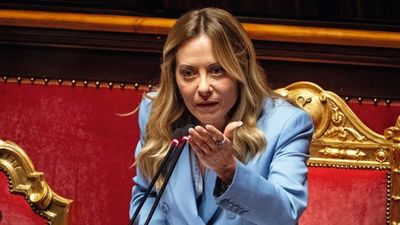
Italy's Prime Minister, Giorgia Meloni, is set to set a record as the longest-serving head of government in the country's history on September 4. However, Italy's frequent changes of government have often concealed a more stable political system than might appear at first glance.
Meloni's government is Italy's 68th since 1946 and is led by the 31st prime minister of the republican era. Unlike in some other countries, in Italy a new government is considered to have been formed even after a major cabinet reshuffle, even when the prime minister remains the same.
Over the 80 years, from the formation of Alcide De Gasperi's government in July 1946 to Meloni's record in 2026, an Italian government has lasted an average of about 14 months.
This figure varies depending on the methodology. If only the period from taking office to the resignation of the government is counted, the average is shorter, as outgoing governments often continue to work in a technical capacity.
The shortest-lived government was the first government of Amintore Fanfani, which lasted only 22 days in 1954, writes Reuters .
Before Meloni, only four governments had lasted more than 1,000 days: Silvio Berlusconi's second government, with 1,412 days from 2001 to 2005; Berlusconi's fourth government, with 1,287 days from 2008 to 2011; Bettino Craxi's government, with 1,093 days from 1983 to 1986; and Matteo Renzi's government, with 1,024 days from 2014 to 2016.
In total, Berlusconi served as prime minister for about nine years, in four terms.
The post-war Italian system combined a proportional electoral system, which fostered fragmentation of the political scene, with coalition governments exposed to internal disputes.
The constitution also requires the government to have the confidence of the Chamber of Deputies and the Senate – two chambers with equal powers – thus giving smaller coalition partners considerable negotiating power.
However, frequent changes of government have not always meant a complete change of political course. Throughout most of the post-war period, the Christian Democrats remained at the center of power, while prime ministers and coalition formulas changed around them.
Despite frequent changes of government, nine of the 18 post-war legislatures have largely managed to complete their usual five-year term, while five others have lasted four years.
Over the past 22 years, Italy has used three different electoral systems in parliamentary elections. Meanwhile, Meloni has promised to introduce a fourth system before the 2027 elections, arguing that it would bring more political stability. /Telegraph/