
Why do so many countries want to join the EU, but not the rich countries of Europe?
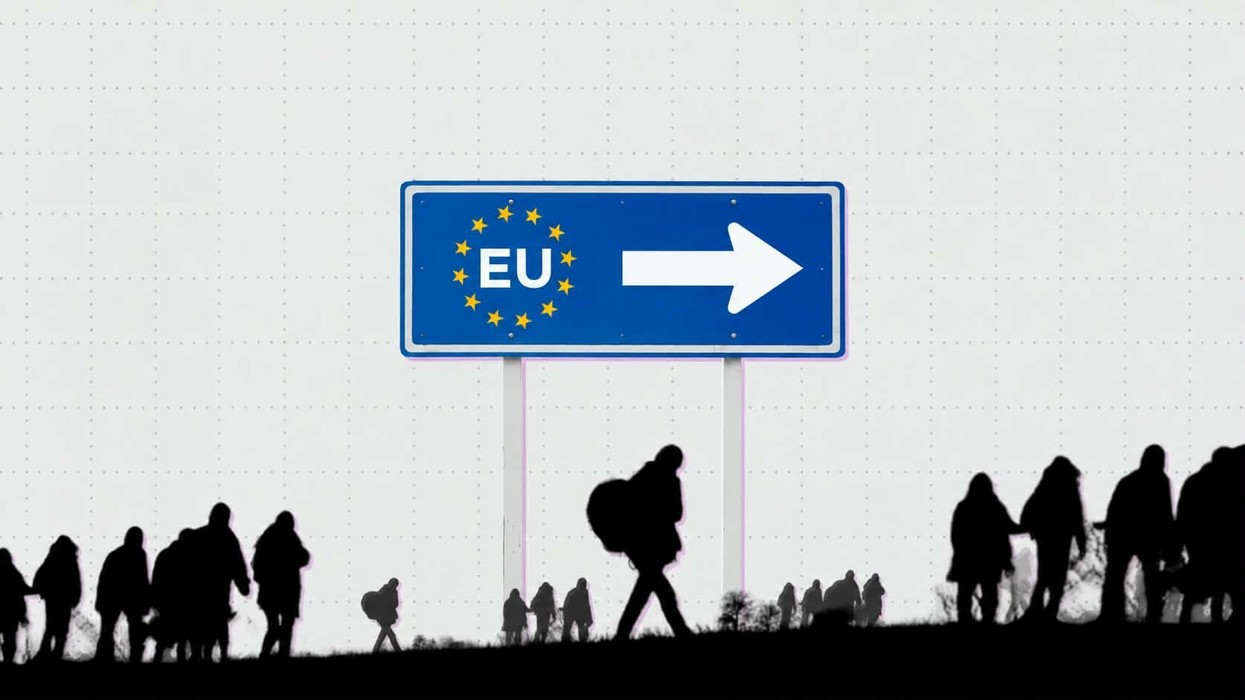
Nine candidate countries are vying for membership in the European Union. Meanwhile, three of Europe's richest democracies are doing everything they can to stay outside. Is the EU's appeal weaker in the continent's wealthiest countries?
Ukraine and Moldova have completed the review of their legislation to align it with EU rules. Montenegro has opened all 33 negotiation chapters and provisionally closed 18 of them, and aims to complete the accession process in the coming years. Albania, meanwhile, has opened all negotiation chapters and provisionally closed three of them.
Each of these countries is poorer, has less consolidated institutions or is located closer to Russia's borders than Iceland, yet all want to become part of the EU, euronews reports.
Iceland, richer and more stable than most EU member states, said no. On August 29, voters rejected by 52.8 percent to 47.2 percent the proposal to reopen membership negotiations.
Iceland remains part of the European Economic Area and the Schengen Area, retaining access to the European single market. Essentially, it chose to maintain this relationship with the EU, without taking the further step towards full membership.
Why did Iceland say no?
For candidate countries, EU membership brings fundamental changes. “The benefits of EU membership are different for rich and already integrated countries,” says Tinatin Akhvlediani, head of the enlargement program at the Center for European Policy Studies (CEPS).
Aspiring countries like Ukraine and Montenegro benefit from strong geopolitical support, access to European funds, and a reform framework that makes any setback in the process of democratization and institutional consolidation politically more costly.
For Iceland, meanwhile, most of the economic benefits were already secured through the European Economic Area, while the country's security was guaranteed by NATO membership. The political dimension remained mainly on the table: a seat in the Brussels institutions, in exchange for the further transfer of some sovereignty towards a closer union with the other member states.
“The benefits of membership are less tangible for voters than those related to economic convergence or democratic consolidation,” says Akhvlediani. “For countries that already have prosperity, stability and access to the common market, the EU needs to present a more compelling political argument in favor of membership.”
Iceland is the case that tests this argument, and, according to Akhvledian himself, the EU failed to present it convincingly enough.
The “yes” campaign had strong arguments in its favor. The central bank’s base interest rate was 8 percent, compared to 2.25 percent at the European Central Bank (ECB), while tensions in the Arctic had increased since US President Donald Trump revived discussions about buying Greenland. However, these arguments were not enough. Even the security issue, which initially put Iceland’s EU membership back on the political agenda, failed to bridge the gap on its own.
“Security concerns helped push the issue of Iceland’s EU membership back onto the agenda, especially given the changing nature of transatlantic relations, Russia’s ongoing war in Ukraine, and the fact that the Arctic is increasingly becoming a contested space,” says Akhvlediani, adding that “security alone was not enough to win the referendum.”
What pushed Icelanders to the “no” vote, almost everyone agrees, was fishing. About 90 percent of the country's fishing companies openly opposed membership, as they did not want Icelandic waters to be subject to the EU's Common Fisheries Policy.
Akhvlediani calls fishing in Iceland “not just an economic sector,” but something “closely tied to national identity.” According to her, this also explains the victory of the “no” campaign: “Ultimately, voters weigh geopolitical risks against very concrete personal and domestic interests. For Iceland, fishing and sovereignty were more immediate and politically important than the broader strategic argument for deeper European integration.”
Mika Aaltola, a Finnish MEP from the centre-right EPP group, extends the same logic to agriculture. Icelandic lamb, dairy and greenhouse production survives “behind high tariff barriers”, which EU rules would change.
"Primary production in a harsh environment is an existential matter," he says, "and existential things don't mix with others."
What does this mean for Brussels?
Brussels had hoped for a different outcome, and with good reason. Diplomats saw an Icelandic “yes” as an important test of the European Union’s pulling power, as proof that the EU could attract not only states seeking economic rescue or reform, but also a rich, functioning democracy.
Some officials hoped that a joint push, coupled with Montenegro's progress towards membership, would make it easier to promote the enlargement policy even in skeptical capitals of other member states.
Akhvlediani had supported this argument even before the vote, saying that a “yes” vote would prove that the EU is attractive beyond poorer or less stable countries. The “no” result complicates this narrative, although she is careful not to exaggerate its impact. “It is not good news for the enlargement narrative, but it is not a rejection of the European project,” she says. “A ‘no’ vote means that the EU cannot use Iceland as evidence of this additional attractiveness.”
According to her, what the result confirms is a structural limitation in Brussels' argument: "Economic integration does not automatically translate into political integration."
Iceland is not an isolated case among wealthy European countries that remain outside the EU. Norway has incorporated about three-quarters of EU laws into its legislation through the European Economic Area, without ever holding a referendum in favor of EU membership.
Polls this year show that only 37 percent of Norwegians support membership, while 49 percent are against. This attitude has remained almost unchanged since Norwegians rejected membership in two referendums, in 1972 and 1994.
Even Switzerland, instead of seeking a seat at the EU decision-making table, has chosen over the past year to deepen bilateral relations with the Union.
The wealthy countries that remain outside the EU have something that other candidates do not: functional alternatives to full membership, which provide them with most of the economic benefits without the political cost that membership entails.
Warning sign or isolated case?
Not everyone sees Iceland's vote as a stance against EU enlargement as a whole. Christine Leuchtenmüller, from the Konrad Adenauer Foundation, calls for caution in interpreting the result.
Iceland, she says, is a “very specific” case, influenced by decades of debates over fisheries and sovereignty. A “no” vote, she says, “would largely reflect Iceland’s particular political and economic circumstances” and not necessarily say much about enlargement policy in general.
Akhvlediani agrees that Iceland is a special case, but not one without lessons for other countries. According to her, one of the main lessons is directly related to Oslo.
“The main message is that the EU cannot assume that deep economic integration will naturally lead to political membership. For countries like Norway and, potentially, other wealthy European democracies, the question is what additional value full membership offers, compared to the arrangements they already have.”
For Ukraine, Moldova and the Western Balkans, the answer is clear: security, funding and a way to protect reforms from any future rollbacks. For Iceland, Norway and Switzerland, this does not apply. Akhvlediani does not think the solution is to create a special membership formula for wealthy democracies. In her opinion, the issue is simpler, but also more difficult.
“Brussels could improve the way it communicates and explains the benefits of membership: political influence, participation in decision-making, deeper economic integration and strategic weight in the European security architecture,” she says.
The dividing line in European politics is not simply between those who are pro-EU and those who are against it. It is more about the choice between having influence within the institutions of Brussels and maintaining control outside them.
As Akhvlediani summarizes, “if the EU wants to remain an attractive geopolitical project, it must not only ask candidate countries what they need to do to join, but also clearly explain to them what membership offers them in return.” /Telegraph/