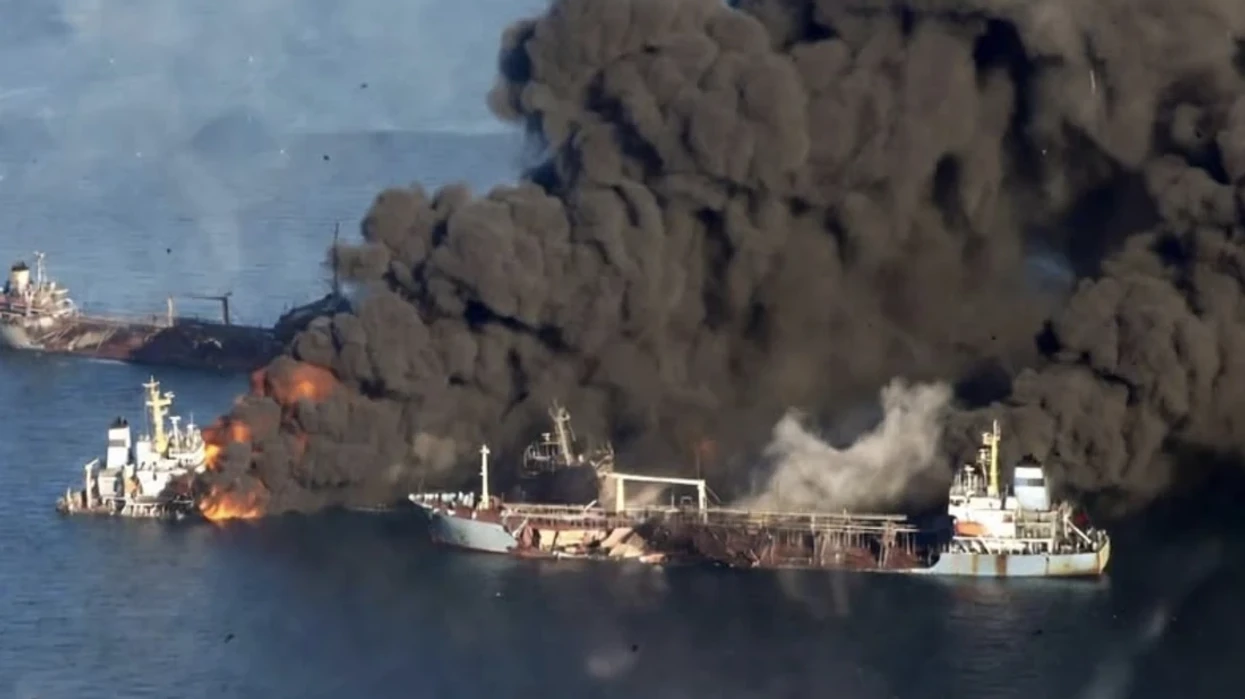
A dramatic photograph showing several ships engulfed in flames and a giant cloud of black smoke has been published on the X network by American military analyst and Kyiv Post contributor Chuck Pfarrer.
He claims the photo depicts the aftermath of Ukrainian attacks on Russian ships in the Sea of Azov. However, the authenticity of the photo and its exact location have not been independently verified.
According to Pfarrer, over a 96-hour period, Ukraine has hit 35 Russian tankers and transport ships, an average of one ship every three hours. He claims that the repeated attacks have destroyed Russia's radars, sensors and close-in defense systems, warning that the operations will continue.
Meanwhile, the General Staff of the Ukrainian Army announced that during the night between July 10 and 11, Ukrainian forces hit 21 more Russian tankers in the Sea of Azov. According to Kiev, these ships were used to transport oil and its derivatives in violation of international sanctions, while four tugboats, two cargo ships and a port cleaning ship were also hit. The extent of the damage is still unknown.
The commander of the Ukrainian Unmanned Systems Forces, Robert Brovdi ("Magyar"), stated that a total of 28 vessels were hit during the operation and 73 successful hits were recorded. On the other hand, Russian authorities claim that only four ships were attacked, which suffered minor damage, while one sailor was killed.
According to Ukrainian reports and Reuters, about 50 vessels carrying fuel have been damaged over the past five days. Due to overlapping time periods and different categories of vessels included in the reports, the exact number of vessels hit cannot be independently confirmed.
The attacks have forced Russia to temporarily suspend navigation in the Don–Azov Canal and stop accepting requests for passage through the Kerch Strait. The Sea of Azov is a key supply route for Russian forces in occupied Crimea, while Ukraine aims to weaken Russian military logistics by striking tankers, ports, fuel depots, refineries and energy infrastructure. /Telegraph/