
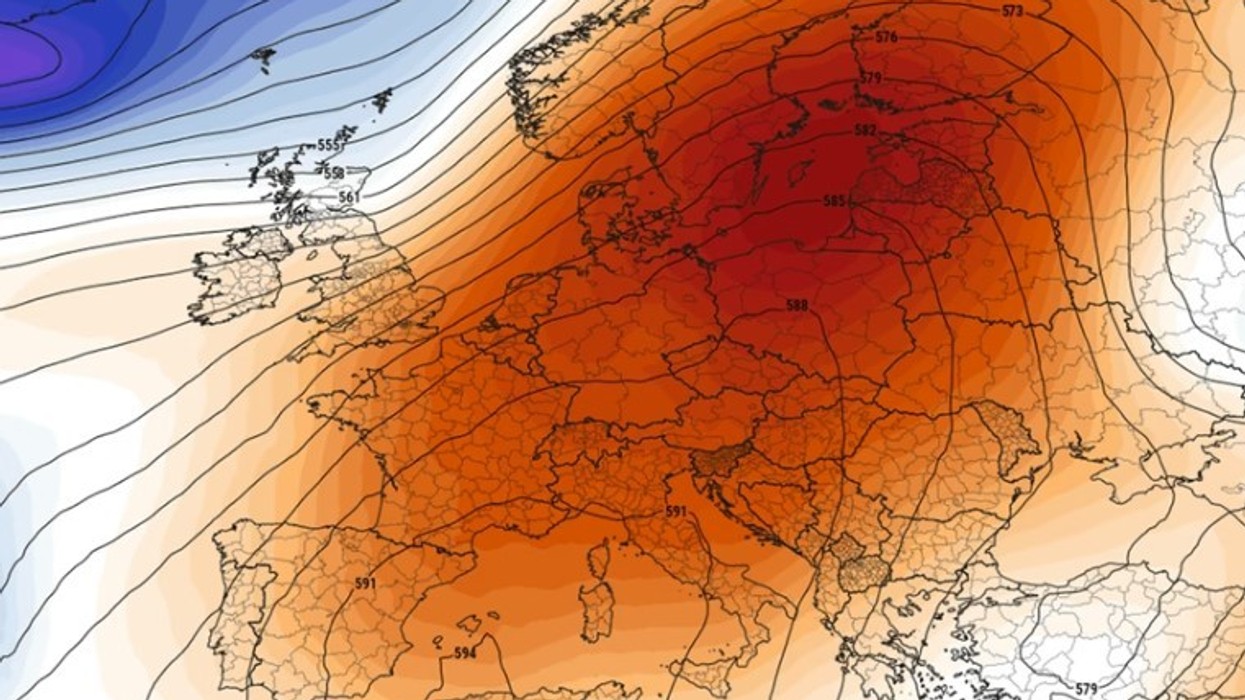
European meteorologists are warning of the formation of a giant "heat dome" over Europe, an atmospheric phenomenon that could cause severe heat waves in the coming days and weeks.
According to analyses published by Severe Weather Europe , in some areas of the continent temperatures could approach or even exceed 45 degrees Celsius.
This phenomenon occurs when a powerful high-pressure system remains stable over a region, blocking the normal circulation of air masses.
As a result, hot air accumulates and remains trapped near the earth's surface, causing extremely high temperatures for long periods.
Meteorologists describe this phenomenon as a lid on a pot, preventing heat from escaping and keeping it concentrated in the same area for a long period.
According to forecasts, the hot air mass will move from North Africa towards Southern and Central Europe, initially hitting Spain, Portugal, France and Italy, before expanding to other parts of the continent.
In some regions of Europe, temperatures could be 12 to 16 degrees Celsius above the climate average for this time of year, marking a significant deviation from normal seasonal conditions.
The Balkans are also expected to be affected by this intense heat wave. According to current forecasts, temperatures in the region will exceed 30 degrees Celsius, while in some areas they may approach or even exceed 35 degrees.
However, meteorologists point out that extreme temperatures of around 45 degrees Celsius are expected to be recorded mainly in the hottest parts of Southwestern Europe, while the Balkans will face less extreme conditions, but still significantly hotter than usual.
Experts warn that heat domes have been the cause of some of the deadliest heatwaves to hit Europe in recent years.
In addition to extreme temperatures, these atmospheric phenomena increase the risk of prolonged droughts, the spread of forest fires, and serious health problems, especially among the elderly and people suffering from chronic diseases.
Meteorologists advise citizens to avoid prolonged exposure to the sun during the hottest hours of the day, to consume sufficient water and to take special care of groups most sensitive to high temperatures. /Telegraph/