

Top News

Promo Advertise here





Jobs
Deals
The German government has reiterated its opposition to reopening diplomatic channels with Russian President Vladimir Putin as part of negotiations to end the war in Ukraine, an idea that has gained ground after being supported by the leaders of France and Italy.
"We support direct talks between Russia and Ukraine at the highest level, as there can be no just and lasting peace without Ukraine's participation," a spokesman for Germany's Federal Foreign Ministry told Euronews.
"Unfortunately, so far we have not seen any change in Russia's stance: Russia continues to repeat maximalist demands and shows no real willingness to negotiate, while continuing its brutal attacks on Ukraine's energy infrastructure and other civilian targets."
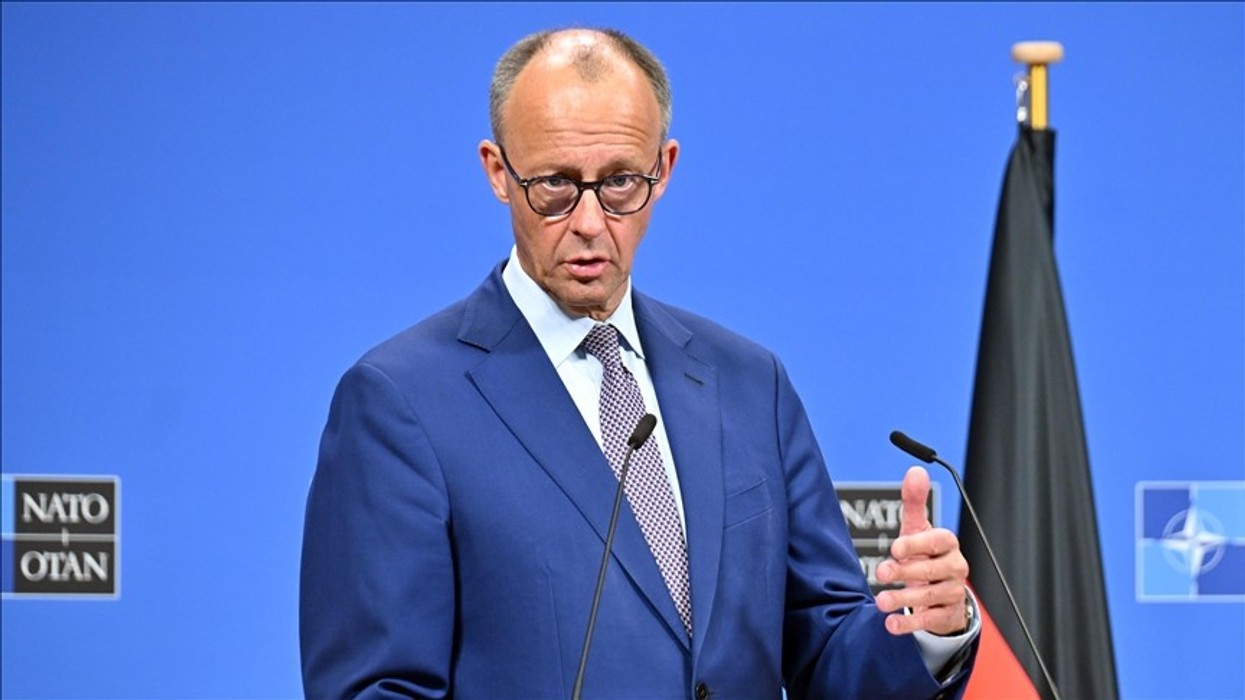
Last week, German Chancellor Friedrich Merz said he was "skeptical" about the prospect of reengaging with the Kremlin, pointing to his continued refusal to impose an unconditional ceasefire in Ukraine, an early demand from the Europeans.
"We will have to maintain our pressure and sanctions and intensify them whenever possible," Merz said, noting that the European Union was already in contact with Kiev and Washington to convey its unified position.
"Moscow must be ready to end the war. If Moscow is not, the price it has to pay for this war, including the economic price, will increase week after week and month after month. This, unfortunately, is the situation we find ourselves in today," he added.
The comments put Germany, the European Union's largest member state, directly at odds with France. Last month, after hosting a meeting of the "Coalition of the Willing," French President Emmanuel Macron said that dialogue with Putin, largely suspended since February 2022, should resume "as soon as possible."
Italian Prime Minister Giorgia Meloni later supported Macron's stance.
"I believe the time has come for Europe to talk to Russia as well. If Europe decides to participate in this phase of negotiations by talking to only one of the two sides, I fear that in the end the positive contribution it can make will be limited," said Meloni.
The European Commission acknowledged that direct talks could take place "at a certain point," but High Representative Kaja Kallas, who is part of the Commission, later expressed opposition, calling on Russia to be "serious" and make concessions as a first step.
"What we are working on is to put more pressure on Russia so that it moves from pretending to be negotiating to real negotiations," Kallas said.
As peace talks progress and security guarantees are being fleshed out, European capitals are critically examining their role in the process, the outcome of which, if there ever is one, is poised to redefine the continent's security architecture for generations to come.
For some, Russia's relentless bombing campaign, which is plunging Ukraine into power outages in sub-zero temperatures, is reason enough to keep Putin at bay.
"As long as Russia has not changed its actions and objectives in its aggression against Ukraine, it is not possible to engage in talks with Russia, nor should we offer it a way out of isolation," the Estonian Foreign Ministry told Euronews.
"We should not repeat the mistakes made repeatedly by restoring relations when Russia has not changed course," she added.
For others, however, Europeans must pick up the phone themselves to avoid dependence on the White House, which is today the main mediator with Moscow.
"The EU should consider appointing a special envoy for future peace talks on Russia's war in Ukraine," the Czech Republic's foreign ministry told Euronews.
"While the negotiations are currently led by the US, Russia and Ukraine, it makes sense to think about a European role in the long term in order to remain an important participant," the Czech minister added.
As the political debate unfolds, Brussels is preparing a new package of eco-sanctions against Russia, which will be unveiled in the coming days, so that it can be adopted by the time the full-scale invasion reaches its fourth anniversary on February 24. /Telegraph/