
This is how the Albanians in Mavrovo assimilated with the surroundings (Video)

Among them is Mavrova, a very popular tourist area, which hides traces of Albanian roots, which despite assimilation have not disappeared.
The Upper Reka, not far from the Dibra e Madhe, and once a natural part of it, had numerous villages, which, according to the data of the time of the Ottoman Empire, but also the later ones, to the extent of 80 percent were inhabited by Albanians of the Orthodox and Muslim faiths, it is said in an "Exclusive" show of Top Channel television, made in Mavrovo.
First the Bulgarians and then the Serbs followed the schemes for the assimilation of this community. Everything continued in the 19th century, stopped for some time due to the Second World War, and took a full and violent form especially after the creation of Yugoslavia, or more precisely after the breakup of Enver Hoxha's communist Albania with Tito's Yugoslavia.
Constant pressure, violence to change surnames, compulsory schooling only in the Slavic language, and then seduction in various ways, led to a process of assimilation and mass departure. This was the only solution for this deep but big-hearted area, which faced a lot on its head, starting with the forced loss of national identity.
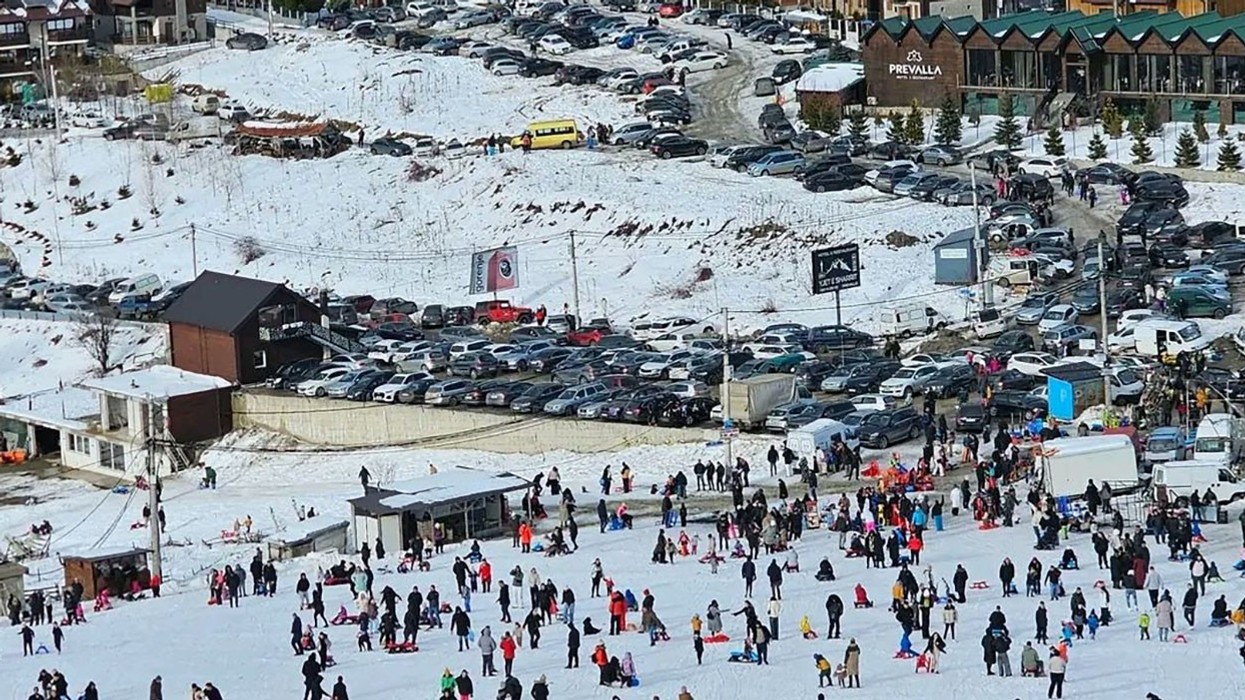
Today, the vast majority of Reka's villages are empty as most of the inhabitants have left. Among them, only Mavrova continues to maintain the rhythm of life, and this only thanks to tourism.
The Mavrova National Park, declared as such in 1949, extends over a wide area, where untouched nature offers rare beauties, with rich flora and fauna, as in the entire Upper Reka. The inhabitants overwhelmingly speak Albanian, even though they do not accept to be so.
Albanians at the root, with the Albanian language, and not Albanians today, even though the language is still there. There is no question of an open camera, everything must be done in secret.
It is enough for businesses in the area to understand and touch their truths, certainly not directly.
Even the questions must be careful, or rather they must seem as natural as possible, so as not to leave any shadow of doubt.
The religious divide has been the most influential. The propaganda machine has given its results. Most of the residents who speak in Albanian, there are others who obviously understand, but do not want to answer you. And despite this, Albanian is naturally passed down from generation to generation, even though there was never a school, or the inhabitants were forcibly forced not to speak their language even in the streets of the village.
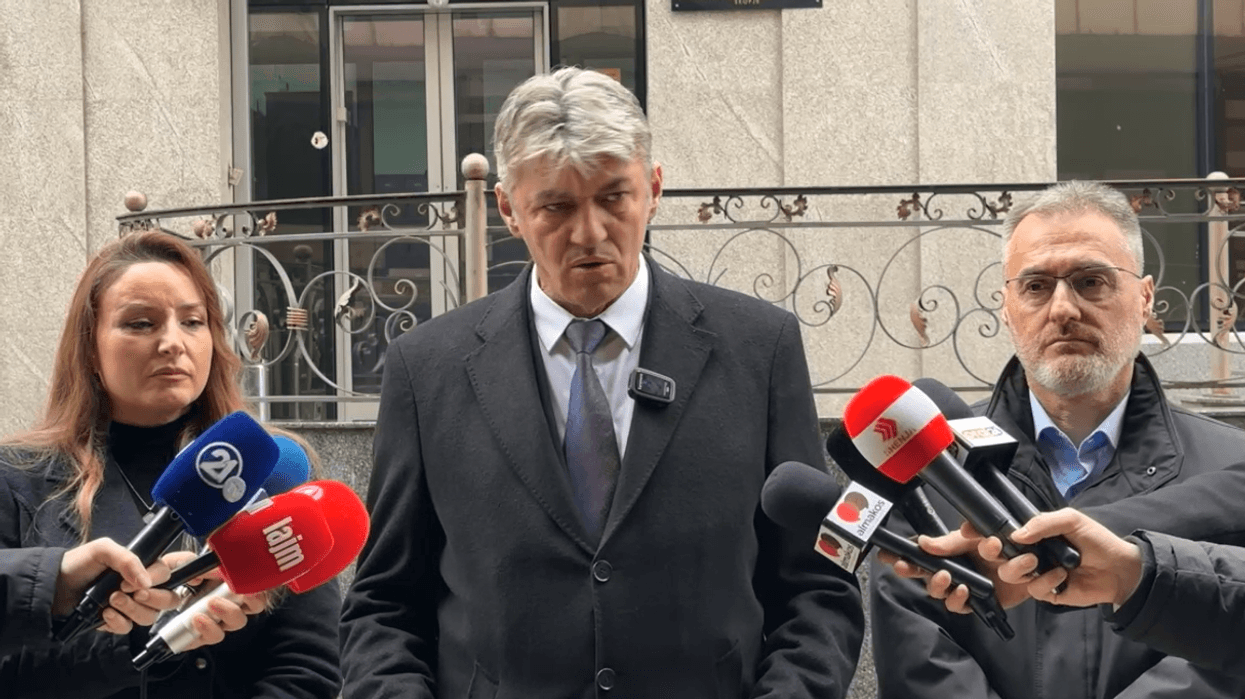
"We have different people here, there are also Albanians, there are also Serbs and Bulgarians, they are mixed. But they also speak Albanian, they speak. There is no Reka, they got up and left the cities. It was there once, now it is completely empty", says a resident.
To find Reka, the former Mavrova, it is enough to look at old photographs. Characteristic weddings, warriors, residents of these areas, and everything else that speaks of their identity, through clothing and many traditions.
Of course, time has passed since the uprising of 1913, which came as a result of the separation from the motherland. An uprising that started from Dibra, reached the mountains of Pristina, Manastir, Veles, Gostivar, Struga and so on. It was September 26-28 of that year, when the fiercest fighting would take place precisely in Mavrovo and Kirčovo, where the insurgent troops took everything under control, demanding immediate union with Albania, which is also shown in numerous documents of the Albanian Archive of State.
More than 102 years later, much has gone, faded, covered, like the fog that seems to swallow everything, even history.
In today's Mavrova, there is no longer anything visible to connect with the past identity. No one shows, no one speaks, no one seeks to break the imposed reality.
"The weather today is not good. When it's good is another thing. The fog has already fallen and you can't see the lakes." Most, if you ask them about the language, give a short answer. "Yes, I know, I learned it."
A little is enough to understand so much, and to follow through them the traces that lead to the truths. Truths, which have nothing to do with sick nationalisms and even less with calls for hatred, but simply and only with history, the history that the people of these areas have made, and which is documented and proven everywhere, even though is not accepted.
Beyond the wretched struggles of Albanian politics in Macedonia, the "Josif Bageri" association is doing an extraordinary job with this community today, which has begun to shake up what seemed lost a long time ago. The one who, however, still speaks the Albanian language everywhere, even in Mavrovo.