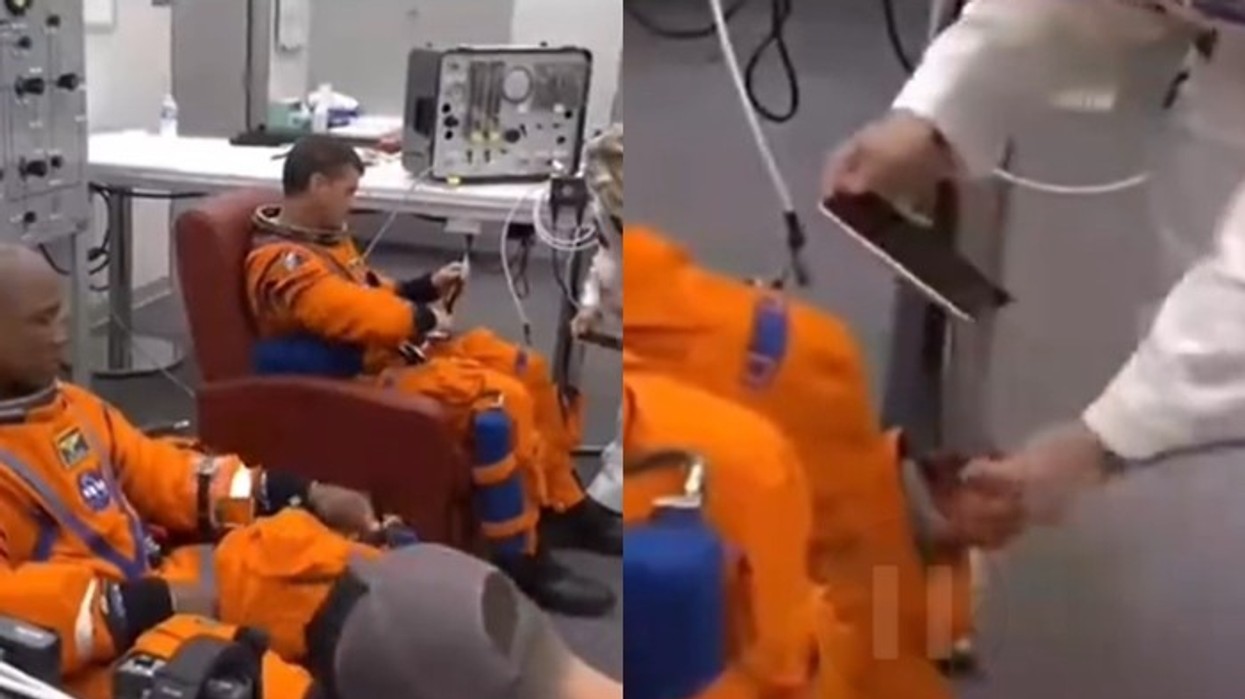
Early images of the Artemis II launch showed an iPhone floating inside the spacecraft.
Here's how Apple's smartphone got approval for space flights.
NASA is very strict when it comes to items transported into space with astronauts.
With the Artemis II trip around the Moon, this is the first time the agency is allowing the crew to carry iPhones in space.
This is a big deal, as NASA has strict rules about what actually goes into space, and detailed testing to match them.
On Friday, the New York Times reported what the iPhone 17 Pro Max had to go through to be allowed into the rocket.
The process is "quite complicated and lengthy," according to professor at BioServe Space Technologies, Tobias Niederwieser.
The first of the four stages involves going through the security panel, performing initial checks on the device.
The second phase looks for potential hazards, such as moving parts or breakable materials like glass.
The third phase aims to develop plans to avoid the issues raised in the second phase, if possible.
The fourth phase then checks whether the plans of the third phase actually work.
Testing iPhones for use in space appeared in February and was an unusual change for NASA.
This was the first time an iPhone had been qualified for orbit and extended use from Earth.
Otherwise, Apple conducted extensive durability tests on its devices and revealed some of the extreme processes in July 2025.
However, while it has been tested for drops, extreme temperatures, and even high-intensity light, it doesn't appear that Apple performed any anti-gravity testing.
It is reported that the iPhone allowed by NASA will not be used in a mission-critical way.
They will be used by astronauts to document the experience and capture important moments. /Telegraph/