


By: Devon Van Houten Maldonado/BBC
Translation: Telegrafi.com
In 17th-century Europe, when Michelangelo Merisi da Caravaggio and Peter Paul Rubens painted their famous masterpieces, the blue pigment ultramarine, extracted from the semi-precious stone lapis lazuli, was mined far away in Afghanistan and cost more than its weight in gold. Only the most distinguished painters had the privilege of using this costly material, while other artists were forced to use paler colors, which faded in sunlight. It was not until the Industrial Revolution in the 19th century that a synthetic alternative was invented and true ultramarine blue became widely available.
Read also:
- Art history, through seven colors - How did the color blue come to Europe? - The Martyrdom of Saint Ursula: Caravaggio's Violent Paintings as Inspiration for Cinematography - The forgotten artist who inspired Rembrandt and Rubens
Across the Atlantic, in 17th-century Mexico - then known as New Spain - Baroque colonial artists such as José Juárez, Baltasar de Echave Ibia and Cristóbal de Villalpando created works of art filled with this beautiful blue. How was this possible? Lapis lazuli It was even rarer in the New World. It was not until the mid-20th century that archaeologists discovered that the Maya civilization had invented a durable and brilliant blue pigment, centuries before its land was colonized and its resources exploited.
Ultramarine blue extracted from lapis lazuli in Europe it was not only extremely expensive, but also very difficult to produce. In Europe, blue was reserved for the most important subjects. An example is the painting Adoration of the Magi by Rubens - the version in the Prado Museum in Madrid, on which he worked for more than 20 years. This color was used primarily to paint the robes of the Virgin Mary and was later expanded to include other royal and sacred figures. In Mexico, on the other hand, blue was used to paint much less sacred and more ordinary subjects.
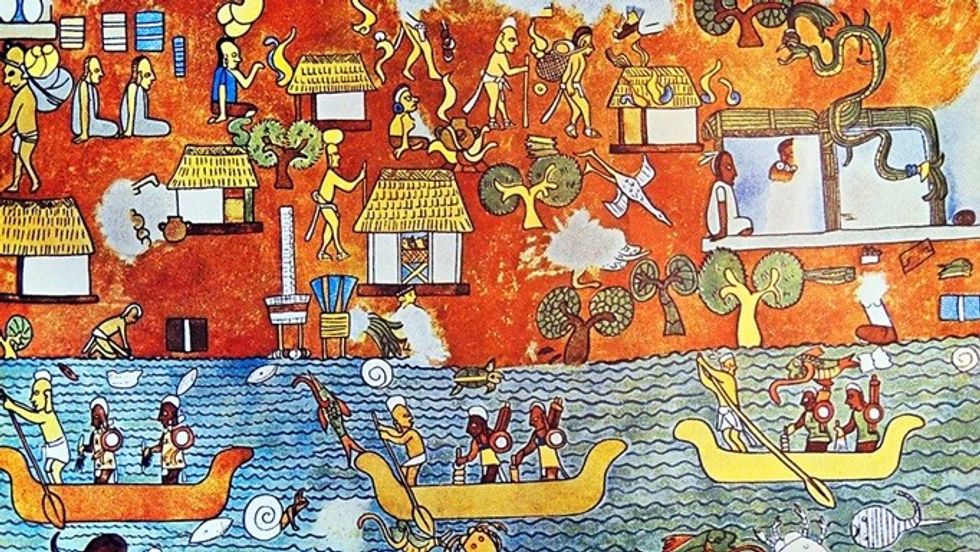
Archaeologists studying pre-Hispanic ruins in Mesoamerica were surprised to discover blue murals in the Riviera Maya, which includes present-day Mexico and Guatemala, dating back to 300 AD. The most famous murals are those in the temple of Chichen Itza, created around 450 AD. For the Maya, this color had a special ceremonial significance. They covered sacrificial victims and the altars where they were offered in a brilliant blue color, writes Diego de Landa Calderón, a bishop in colonial Mexico in the XNUMXth century, in his firsthand accounts.

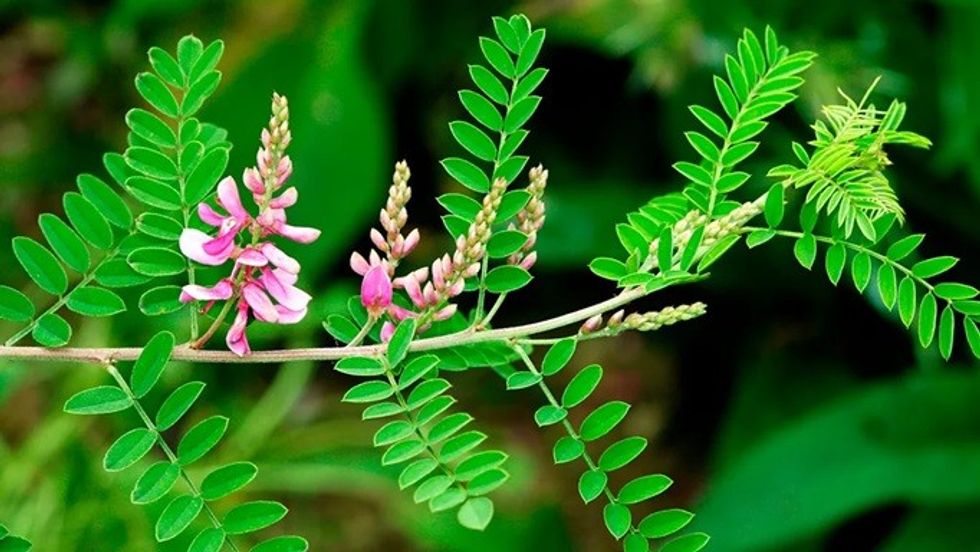
Archaeologists were amazed by the durability of the blue in the Mayan murals. Plant anil, part of the indigo family, was widespread in the region, but it was used primarily to make textile dyes, not paint. Indigo quickly deteriorated from exposure to the sun and the elements, so experts doubted that the Maya could have used the same dye for their murals. It was not until the late 60s that the secret to the durability of Maya Blue was discovered: a rare type of clay called attapulgite, which was mixed with the pigment obtained from the plant anilite. During colonization, indigenous materials such as Mayan Blue and cochineal were exploited, as were every other resource of the land and people of the New World. These colors, which once symbolized the wealth of the Mayan Empire, became a sign of all that was to be plundered.
Master painters from the Americas are mentioned in art history - if they are mentioned at all - as a second-rate school of the Baroque, compared to Caravaggio and Rubens. However, it is too simplistic to assume that these Baroque masters were simply imitators of their European predecessors. In fact, second- and third-generation painters born in Mexico City, such as José Juárez and Baltasar de Echave Ibia, departed from European aesthetics and achieved something entirely unique and multifaceted: grand, sophisticated compositions that captured the full vibrancy of the New World.
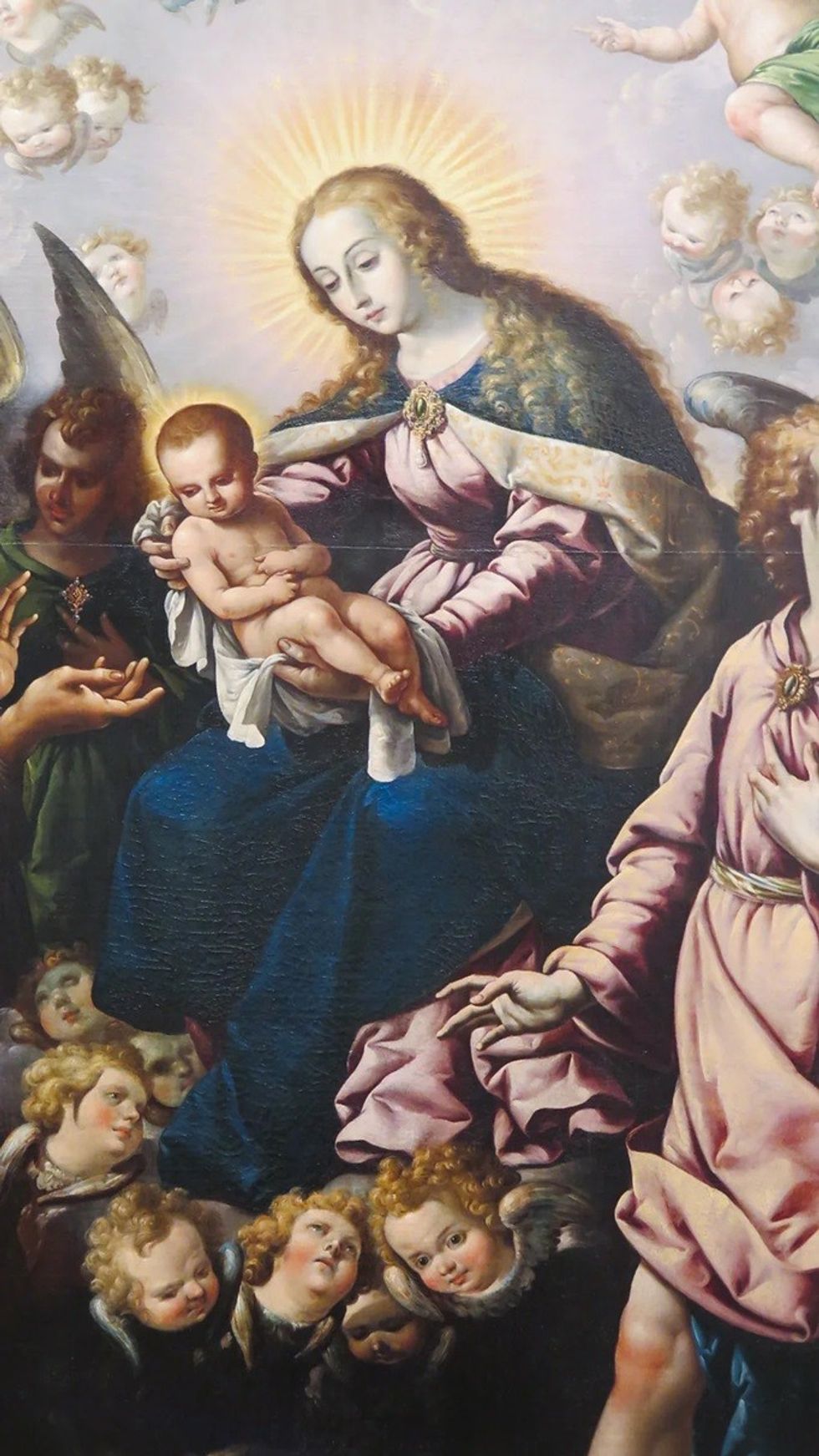
At the National Museum of Fine Arts of Mexico (Munal) in Mexico City, Juárez's works, arranged in chronological order, show his development from a European imitator to a master of the New Spanish Baroque. His early canvases moved away from the dramatic lighting and warmth of European Baroque imagery, while later ones moved towards a cooler saturation of colors throughout the painting's space—with bright blues, yellows, greens, and reds, multiple light sources, collage-like compositions, and grandiose proportions. In part, this was due to his use of indigenous materials, such as Mayan Blue, which expanded his palette.
While Rubens also used bright colors, his compositions were generally more chaotic and warmer than Juárez's. Juárez's palette was more vibrant than Rubens's—perhaps the most vibrant of all the European Baroque—but his compositions bore more resemblance to those of Caravaggio. Caravaggio's canvases, without exception, were filled with rich reds and yellows, but were almost entirely devoid of blue. If you think of a Caravaggio masterpiece, blue is usually absent. The closest thing to a Caravaggio with blue hues is Juárez's. But despite his influence and his masterfully executed compositions, Juárez died in poverty. If Juárez died penniless, how could he have afforded to commission such large quantities of the precious stone? lapis lazuli from Europe?
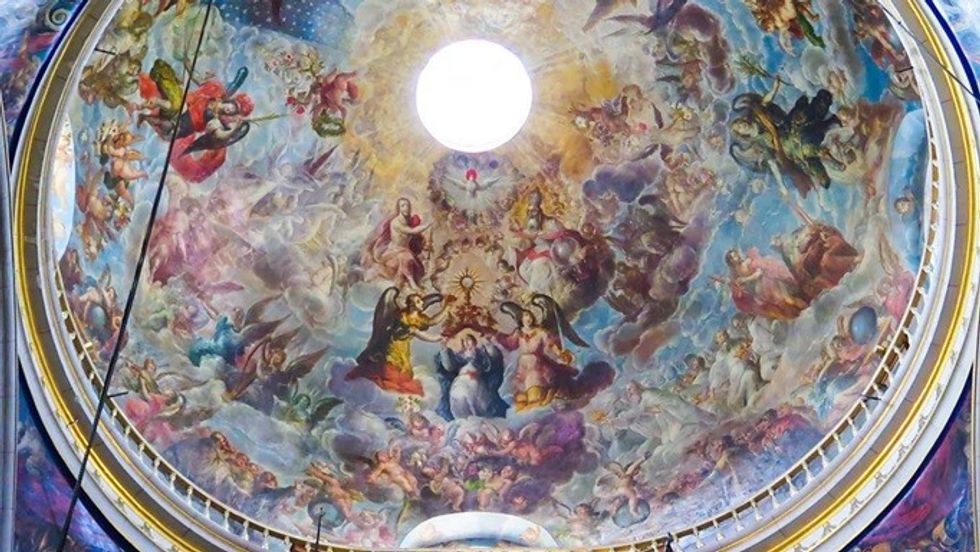
On the other hand, Villalpando, who is often considered the most prolific colonial painter in New Spain, imitated the chaotic compositions of Rubens. Villalpando fits more clearly within the European history of Baroque painting and did not depart from Rubens's "fear of space" - the Baroque idea that every space of the canvas should be filled with images and details. For this reason, he was more readily accepted by the canon of art history as the leading figure of the New Spanish Baroque. However, as much as he wanted to imitate Rubens, Villalpando painted with Mesoamerican materials and labor. The consistent result - the same as his contemporaries in Mexico - was that his paintings and murals had cooler tones and more saturated colors. His mural in the dome of the Puebla Cathedral was the first and only of its kind in New Spain. Mixed blue and purple clouds create the backdrop for figures of the Virgin, saints, and angels painted by Villalpando. Although he sought to bring European Baroque to America, the materials he used identified him as a criollo—a racially unmixed descendant of the Spanish who settled in Mexico City.
Baltasar de Echave Ibia used such rich and complex blue tones that he became known as The Blues' Echave (Echave/Echave of Blue). His father, Baltasar de Echave Orio, also used blue extensively, but Echave Ibia became particularly famous for his extensive use and mastery of the color. There is a reason why Ibia, working in Mexico City between the 17th and 18th centuries, had access to large quantities of the blue pigment. He, like Juárez and Villalpando, had sources of this brilliant color much closer to home.
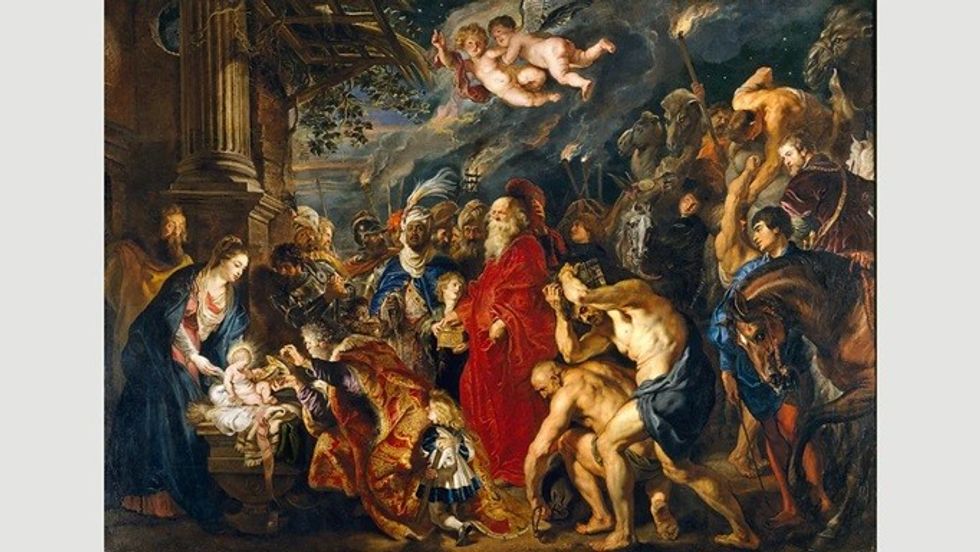
Lack of written evidence for the use of anilite or Mayan Blue in Baroque paintings of New Spain, is compensated by visual evidence. From the works of these artists and others in colonized America, it is clear that Baroque artists in the New World were not using the same blue pigment as their European colleagues. The blue of lapis lazuli The blue used in Europe was a dark ultramarine, while the blue used in New Spain had bright azure tones, derived from Mayan pigment. Mayan Blue is one of the most enduring colors in all of Mesoamerica, as the 1600-year-old murals of Chichen Itza attest. Perhaps this resistance to time is why Baroque canvases and murals in the Americas, from Mexico to Peru, continue to shine through the centuries.
This combination of influences, from the pinnacles to the European Baroque, occurring in Latin America on the canvases of Creole artists, suggests that globalization began much earlier than academic history has led us to believe. /Telegraph/