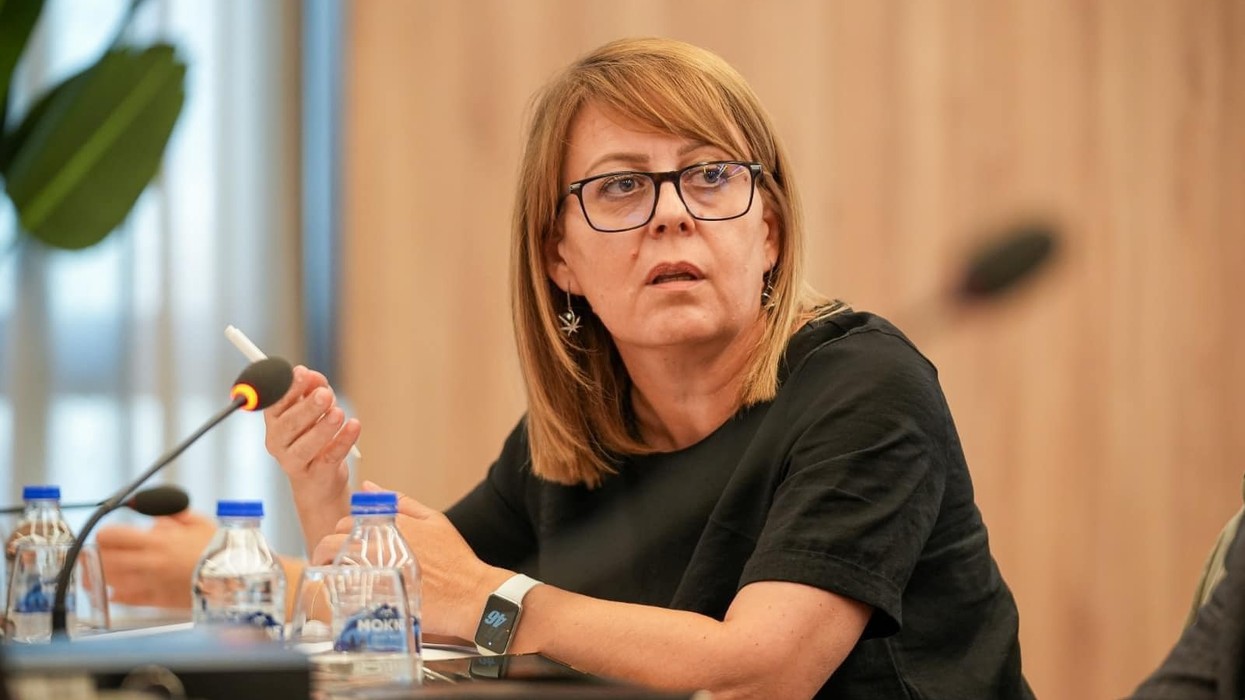


Anila Shuka 05 May 2003, Ferrara: My cousin, Blerina, has invited me to a Mahler Chamber Orchestra concert. It is the eighth symphony of perhaps the most famous German composer of the XNUMXth century, Hans Werner Henze. Enter the Teatro Comunalepa, known for its repertoire. I was on vacation and, after all, I knew that whatever it was, it wouldn't hurt after a year of being fed free alternative concerts in my then East Berlin neighborhood. When at the end, not without solemnity and respect, the author is introduced and I see that old, wizened man, with his eyes set in small sockets, when he walks and drags his feet on the stage floor, I am seized with a great desire to meet him. I am grateful again to Blerina, who, when I communicated this wish to her, took me by the hand and pulled me backstage through the crowd of people until we reached the composer.
The conversation was short, of course. But it was important for me to share with him a name that had less to do with music than with his private life: Ingeborg Bachmann. She had been separated from the world for thirty years, in a most terrible way. Henze, at that age of 76, is not quite sure of the date: He asks his companion in Italian: "When did Bachmann die?" "1971," he says. "1973," I carefully correct. "Ah yes, 1973", he says, then translates to me in German: "It's a sad story. I have never accepted it".
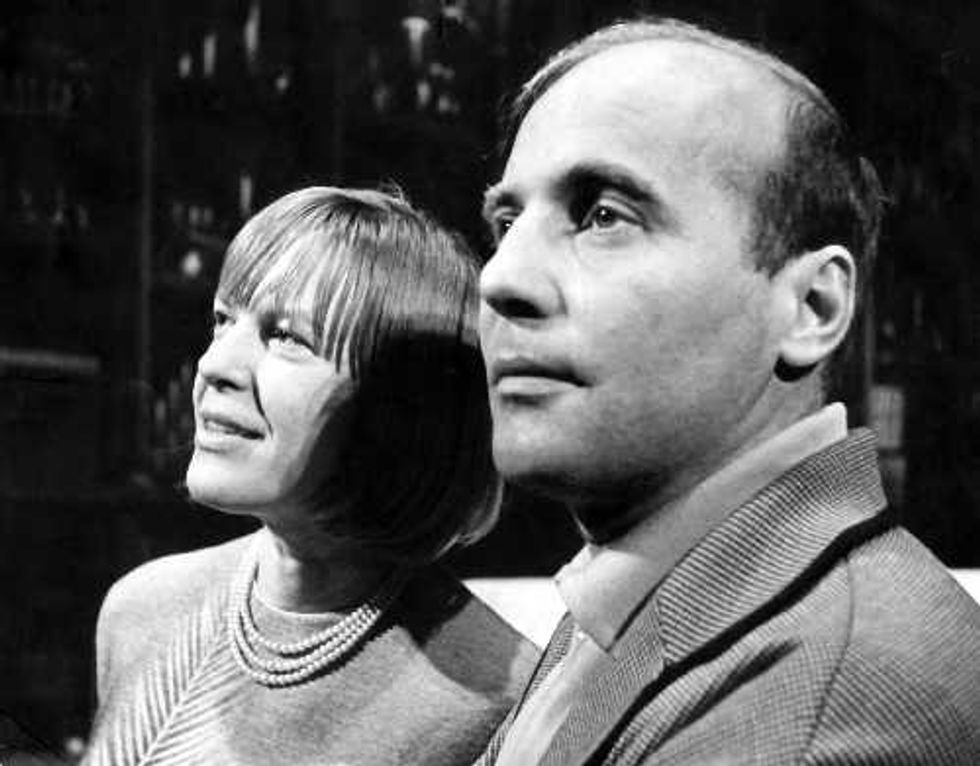 Ingeborg Bachmann and Hans Werner Henze
Ingeborg Bachmann and Hans Werner Henze, both born in 1926, had a platonic love. It could not be otherwise, because Henze was gay. He was her most engaged admirer and critic, her brother, friend, mother and father, the harbor where she cast anchor to rest whenever she felt herself exhausted by the wars with the male sex. Henze took her to his home in Rome, healed her wounds and encouraged her to deal with her true vocation, the art of writing, which for Henze was "Duty". He did so in 1963, when he received an alarming letter from his old girlfriend, after she had finally separated from Max Frisch.
July 3, 1958, Paris: In a cafe in front of the Theaterdes Nations. They each have a glass of Pernod in front of them. She is 32 years old, he is 47, 15 years older.
Weeks ago, Hamburg: He had heard a radio drama of hers (Dergute Gottvon Manhattan) and had been impressed and had started a letter. "Her answer surprised me: She would go to Paris and pass through Zurich, but she only had four or five days. What did he mean by that? Then it didn't come" (Montauk, 1975).
Some time later in Paris: He had gone to the premiere of the play (Biedermann und die Brandstifter). It is not known. To meet her ex-boyfriend, now married, Paul Celan? She learns about him from the newspapers, then discovers his lodgings in Paris: the Hotel du Louvre.
We return to the cafe: She "dressed for the loggia" (Frisch), he with two tickets for the balcony. Divorced, due to countless affairs, he had been living separated from his wife and three children for a long time. She is unmarried, but with many admirers and lovers, probably more platonic than carnal love. Just a day before, on July 2, 1958, you had had the last parting meeting with one of the eyes in Paris: the poet Paul Celan and his wife, Giselle. Max Frisch had no way of knowing all this: "I knew nothing about her life, not even rumours. Do you live with a child? It was the first thing I asked and she was happy, surprised, happy that someone didn't know anything about her" (Montauk).
And, rightly so, because Ingeborg Bachmann, born on June 25, 1926 in Klagenfurt, Austria, who had studied philosophy in Vienna and had critically dealt with the work of Martin Heidegger in her doctoral thesis, was not so unknown. No later than 1953, when he was awarded the "Gruppe 47" prize, awarded by writers to young writers, for the volume of poems "Die Gestundene Zeit" (The Postponed Time), no observant reader of feuilletons could he said he didn't know her name. He had even reached the front page of the magazine "Der Spiegel", which since then, and until today, was the most powerful journalistic magazine in Germany.
Max Frisch, born on May 15, 1911 in Zurich, Switzerland, first worked as an architect by day and as a playwright by night, then left architecture and became a freelance writer, wrote several plays, two novels and was awarded with many prizes. The play that would take place in the theater opposite the cafe where they were now sitting, his first premiere in Paris, would make him famous outside the German-speaking world.
The actors were waiting for him, the audience was waiting for him, he himself was satisfied with the performance, and yet: He doesn't invite her either to the loggia or to the balcony, but to a dinner outside the theater and a sleepless night on the streets of the capital of France. The next day, in the morning rush: "The first kisses on a public bench, then in the markets, the first coffee: at the table next to the butchers with bloody aprons, the rude warning" (Montauk).
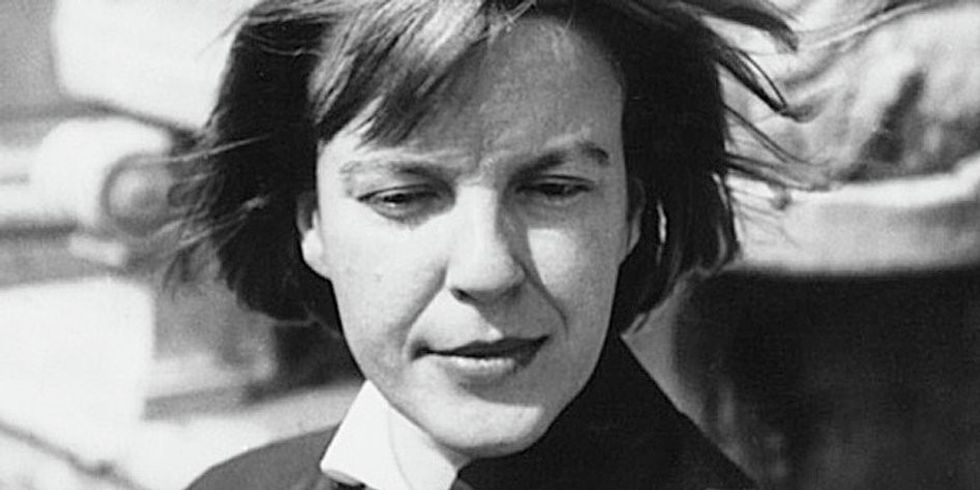 Ingeborg bachmann
During the next five years: For the intellectual press they were "the fabulous couple of the literary scene". They would often be seen together as a couple or with friends in the restaurants of Zurich, Rome, Naples, Berlin, London, New York. The seemingly beautiful relationship on the outside was excruciating on the inside. At first Bachmann, who at that time was working as a radio drama editor and playwright in Munich, goes to live with him in Zurich. Then they get a shared apartment in Uetikonam See. A year later, Frisch will send him a letter asking them to marry. Her rejecting and reproachful answer: "What did I mean by marriage, half a year after the dissolution of my bourgeois marriage?" (Montauk). However, the relationship continued for another four years between their residences in Rome and Zurich.
How this connection was actually, this cannot be said with precision. Because the main documents that could give the biographers a reliable material for the reconstruction of their relationship, i.e. the correspondence, have been blocked by the heirs of Ingeborg Bachmann. Until the minds of these people are filled to give permission to open, biographers will be content with the literary works of two writers who had this connection as a subject, such as Max Frisch's novels, "Mein Namesei Gantenbein" (title in Albanian: "Me, Myself and Someone Else", PA publications, 2014) first published two years after the breakup, in 1965, or "Montauk", published two years after Bachmann's death in 1975. Or Bachmann's trilogy, "Todesarten" (The Way of Death), whose first novel, "Malina", was published in 1971.
These literary works do not give us facts, but at least some points of orientation to develop our fantasy of what their relationship might have really been like. The following is a modest effort. Frisch jealous at the top, she enigmatic and distant. Frisch describes himself as her captive. At first he accompanies her everywhere, for example, to Frankfurt am Main, where she has been invited for a semester as a lecturer at the university: "Sitting in the classroom, during her first lecture, holding her coat on her knees" (Montauk) . Bachmanni, who sees herself as an emancipated woman, does not accept this tutor: their distance grows. She keeps him away from her literary circles and goes on trips for weeks at a time. When she announces her return, he goes and waits for her at the entrance to Rome, for hours, until her blue Volkswagen appears on the road. Or suddenly he takes the road from Rome to Zurich, travels all night without sleep through the difficult mountainous terrain that connects the two countries, in storm and fog, just to make a surprise for the one who has gone to spend some time at the house of their joint near Zurich. That an emancipated woman would not welcome this usurpation is not difficult to imagine.
The distance gets bigger. His rage is even greater and takes on criminal proportions: he penetrates her intimate world, reads the letters of her admirers and eavesdrops on her phone conversations. "Next to her, only she exists, next to her, madness begins" (Montauk). A stupidity, from which even numerous affairs with other women cannot free him. This situation will change four years later, when Frisch, now 51 years old, given over by the Bachmann enigma, falls in love with Marianne Oellers, then 23 years old, 14 years younger than Bachmann, and asks for a separation. In the aforementioned novel "Malina" to be published in 1971, for the date of recognition, July 3, 1958, Bachmann states: "...it is an empty or robbed day, in which I grew old, in which I did not I defended myself and allowed something to happen".
In the letter addressed to her friend Henze in 1963, she writes: "The fact is that I am killed and that this separation means the biggest defeat of my life".
For Ingeborg Bachmann, her first serious attempt to create "something sustainable" comes to an end. But, this relationship, which externally required "bella figura", after actually being a "long, long agony". Two months before the letter was written, Bachmann had attempted suicide. "I can't imagine anything more terrible than what I took away and that haunts me to this day, even though today I'm starting to tell myself that I have to move on, that I have to think about a future, about a life new." ("Die Zeit", 18.11.2004, No. 48).
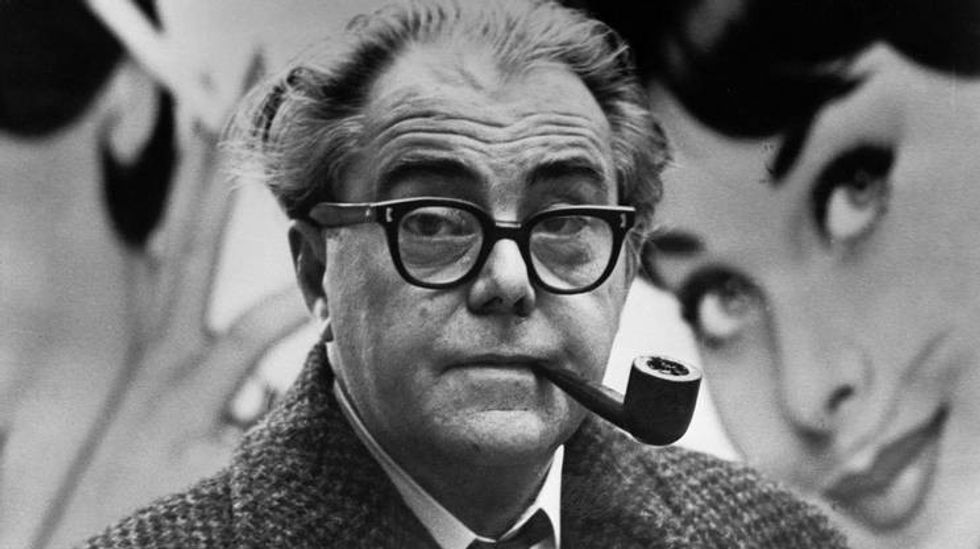 Max frisch
Although they have not had contact for five years, Henze immediately goes to Switzerland and picks her up in his car and takes her to his villa in Rome. That year, in a cafe in Rome, Max Frisch met Ingeborg Bachmann for the last time, where, as Frisch reports in "Montauk", she told him that she had been to their shared house in Uetikonam See and had taken out of a drawer closed his diaries, read them and burned them. Another lost testimony.
Ingeborg Bachmann will live another ten years. With the constant help and push of Henze, who was never satisfied with the speed of her work. She will write some sporadic works, but always welcomed by many readers and reviewers. He will continue to be recognized with well-known prizes such as "Georg Büchner", and even in 1963 someone proposed him for the Nobel Prize. But the hurt from that connection, later potentiated by the interpretations he reads of himself personified in the figure of Lilas, the main character in the above-mentioned novel "Mein Name sei Gantenbein", was so great that life became bearable with only one handful of sedatives.
On September 25, 1973, he fell into bed with a lit cigarette in his hand and caught fire. She is taken to the hospital, but the doctors are unaware of her drug addiction and three weeks later, on October 17, 1973, at the age of 47, she succumbs to a horrible drug-deprived convulsion.
Max Frisch lived until 1991, almost 80 years old. The marriage to Bachmann's successor finally broke up in 1979. A four-year affair followed with a woman even younger than Oellers: Alice Carey, or Lynn, with whom during a brief visit to New York in 1974- he describes it in detail in "Montauk". His last partner was Karin Pilliod, with whom he stretches the most wonderful dramaturgical arc of his love affairs: Pilliod knew Frisch since childhood when he, still married with three children, had a not-so-secret affair , six years old with her mother, also married and with three children, one blind, the first, Karin. (From her interview in "Der Spiegel") .
These data would enter the gossip that would only satisfy voyeurism, if Frischi did not immortalize them in his works which, for me, I must admit, are among the most ruthless and brilliant analyzes of intergender relations. All these women appear there naked to the most intimate recesses of body and soul, just like the author himself. It's true, he doesn't defend himself either, but unlike the author, they didn't choose the role themselves, they don't have any right to speak. Frischi has not even tried to alienate them: He has not even changed their names in "Montauk". All sacrificed for the sake of male literature.
It requires a sensitivity slightly different from that of literature, to understand that these women, especially when they are emancipated, feel themselves hurt by this abuse. Someone could rightfully remind us of that tale of the tortoise and the scorpion and tell us that women were warned, especially the last ones. But not all of them were able to accept their immortalization in literature with sportsmanship. Alice Carey, who was younger in age and who did not occupy any place in the German literary scene, because she was American and was not a writer, after the disappointment of the moment when the book "Montauk" came into her hands, took it with pragmatism.
An Ingeborg Bachmann, who when "Mein Name sei Gantenbeinishte" came out near the 40s (and we are talking about the 60s, when literary judgment was in male hands) felt herself beaten to death. Because with this interpretation she was given the right to create her own independent identity in this male literary world in which she was making a career. And if Bachmann had lived as long as Frischi, he would most likely have won the Nobel Prize.
For her admirer and Austrian Nobel laureate, Elfride Jelinek, Bachmann's figure is representative of all women in their struggle for emancipation, that is, in their struggle to occupy an equal place with men in this world. It is the battle between feelings and reasons, where, as Jelinek writes, "even the smallest impulse of feelings is enough to take women out of their orbit, where they never manage to enter again".
In the afterword of the novel "Malina", where at the end the man turns into a cannibal, who gradually eats the woman's identity until she disappears into a crack in the wall and the man takes her place, Jelinek notes that it is "a war that leaves no trace smaller.”
In the case of Bachmann we are happy to have some traces; and they are not few: 6,000 pages of manuscripts and literature.
"Bachmann should be known through her literary works," Henze instructs me before getting into his car in front of the back door of the Teatro Comunale in Ferrara. I apologize for the burden caused by this memory: "Ah, I am always burdened by this story, but I will swallow it with a whiskey", he says and sits in the driver's seat.