


Top News



Promo Advertise here





Jobs
Real Estate
Elda Shabani
Although many think that clothing has an aesthetic origin, it was first born as a need, to protect the body from climatic factors, to feel more protected from various factors. Just like work tools or food, clothing is considered one of the main means of human life. Clothing can be interpreted as a language that communicates a number of functions. These functions express attitudes within the community related to social, aesthetic, moral and nationalistic ideals. Gradually, in the process of development of human society, clothing was created in accordance with the season, gender, country, age, and social status.
The entire development of clothing is closely related to the history of a country's development. One of the important aspects of the way of life is the folk clothing, which with their diversity enriches the identity and cultural heritage of a country. Folk dress refers to the clothing of rural populations engaged in agriculture, animal husbandry, fishing, etc. Also called country, rural or regional clothing, it can also be considered ethnic clothing in regions of more than one ethnic group.
In all cases, folk dress identified people with a country. We still honor the country's traditional dress today, often wearing it at national festivals and special ceremonial occasions. The Balkan countries have a long and rich history of folk dress.
The middle and upper class of society in the seventeenth and eighteenth centuries maintained a national style, with rich decorative elements and geometric motifs, some of which were religious-tribal symbols, land and fertility; the use of metal coins as pendants around the neck and on the head. The competitiveness of ethnic and religious groups, whose clothing differs from each other in form or decor, had a strong influence of Turkish clothing, since these countries were once part of the Ottoman Empire.
Also, the models of these clothes were influenced by western cultures as well as other eastern countries. Due to the geographical position of Albania and the conditions of historical development or class differences, the typology of Albanian folk clothing has nothing in common with foreign ones. Other components of Albanian folk dress have much earlier traces.
They began to take their appearance at the time of the formation of the feudal principalities, in the c. XII. Among them, among the oldest are long shirts, jubletas, men's dresses, capes, etc., where many elements come from the earliest periods of Illyrian culture. Thus, the jubleta represents the earliest clothing in Albania and the Balkans. It brings the messages of the Illyrian civilization to the Albanian popular culture, which determines their ethnicity. The real flowering of folk dress occurred in the late eighteenth and early nineteenth centuries.
Some of the older ritual uses of folk dress prevailed, in marriage ceremonies and the covering of new mothers with large linen shawls. Folk dress, used on a special day, such as Sunday, holidays. It showed social status and wealth, religious affiliation, etc. Creating that wealth and great variety of folk costumes, traces of which were preserved until the century. XX.
Early ethnologists began the systematic collection of songs, legends, myths, and examples of regional dress to strengthen the argument for the existence of a national identity. Meanwhile, in Albania, the first museum collections were created after the Second World War. The Franciscan priests collected 300 vestments from different regions of the country.
Today, through the development of various ethno-cultural activities, especially for the development of cultural tourism in Albania, but above all in the promotion of the traditions and cultural heritage of the country, the handicraft houses which during these last decades were being revived disappearing.
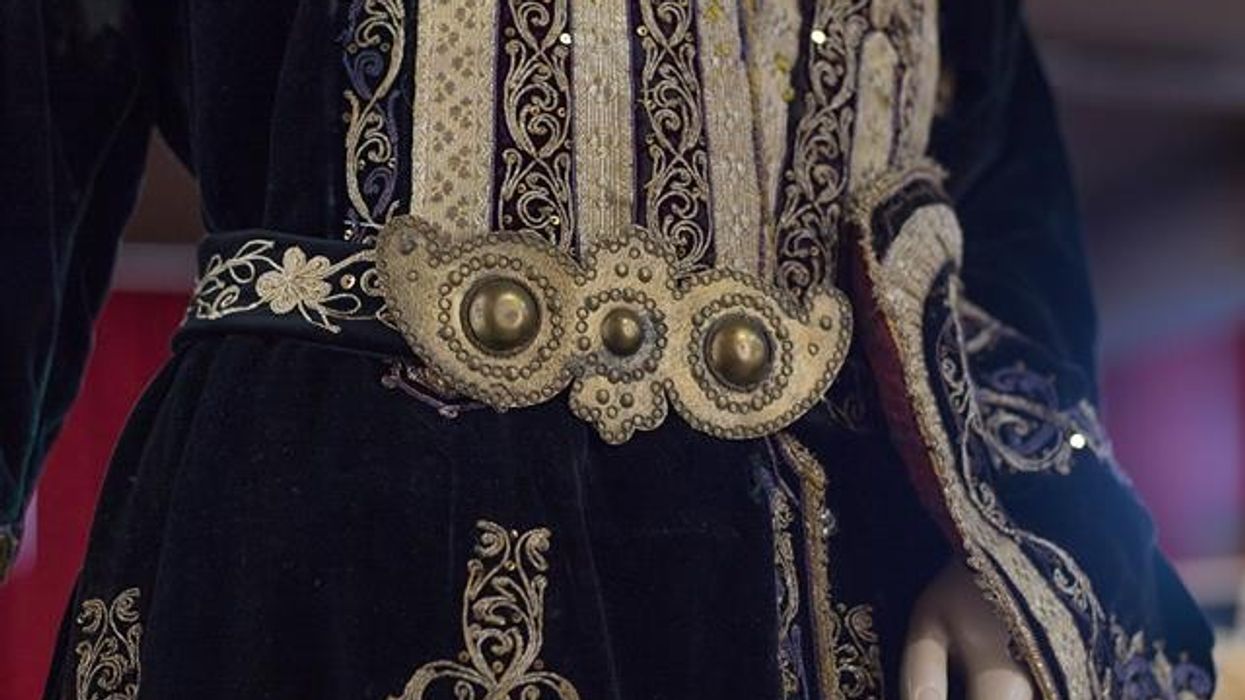
A model of the art museum of traditional Albanian clothing is "Tradita Folk." This museum is part of various activities developed inside and outside the country which has attracted the attention of many foreign visitors.
The museum not only preserves and collects folk clothing dating back to the 15th century, but also pays tribute to the passion and desire, dedication and XNUMX-year experience of Ms. Edlira Sulaj, in their technical study, today the museum reproduces folk clothing from all the provinces of Albania with the same technique thus preserving not only the originality of the clothing but the spirit and culture of a nation.
This Museum, in the month of European Cultural Heritage, has developed many artistic activities. The most recent was the activity of the International Day of Rural Women and Girls, organized in cooperation with the Presidency of the Republic with the participation of foreign diplomats in Albania. In this event, there was a presentation of original traditional clothing made over 100 years ago as well as those skillfully reproduced by the head of the museum together with her staff, who has set up a real laboratory within the premises of this museum.
The study and preservation of folk clothing is important not only to recognize this great cultural wealth, the elements of which come from antiquity and the medieval period, but to simultaneously recognize the cultural relationship with other peoples over the centuries.