By: Gordon G. Chang, author of the books Plan Red: China's Project to Destroy America [Plan Red: China's Project to Destroy America] and The Coming Collapse of China [China's coming collapse] / Newsweek
Translation: Telegrafi.com
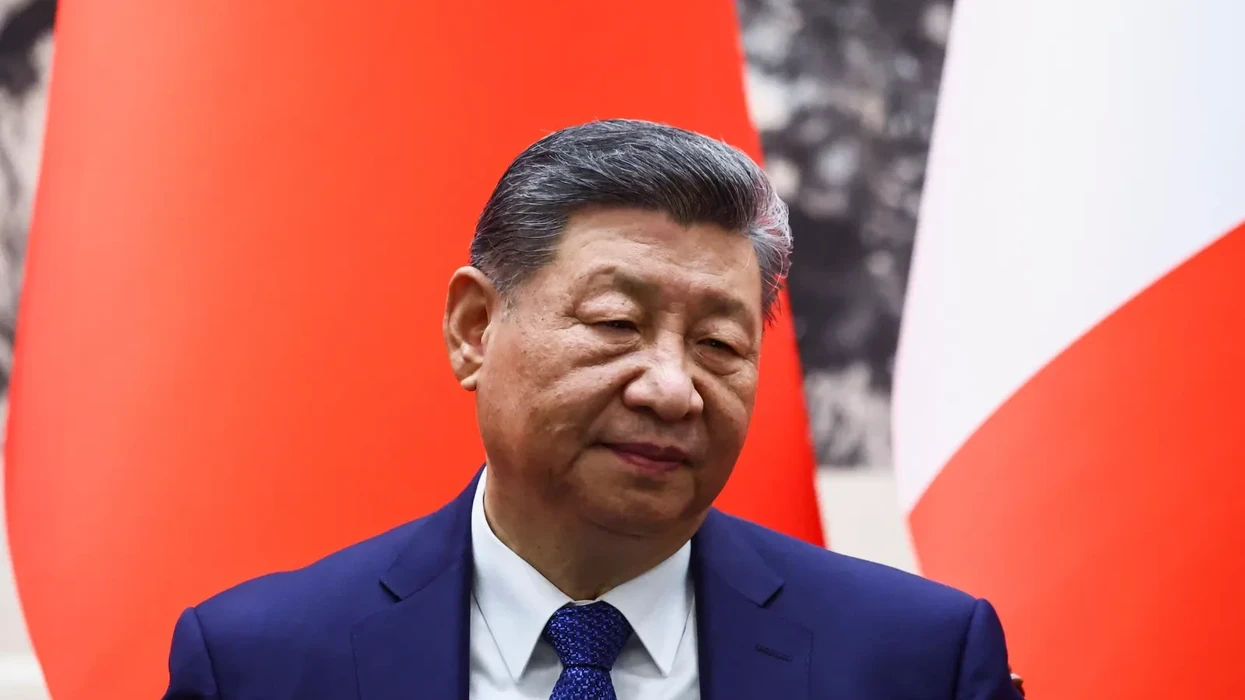
“The fact that Xi Jinping has been able to dismiss so many [People’s Liberation Army – PLA] elites since he took power ... is a clear sign that his position in the regime is unbreakable,” James Char of the S. Rajaratnam School of International Studies in Singapore told CNN last month, shortly after Xi removed two senior generals from key command posts. The media summed up the nearly unanimous view of analysts: “Xi has absolute control over China’s military.”
But the narrative that Xi controls the military is almost certainly false. The purges, carried out on almost everyone as a test of Xi's power, actually show the opposite.
On the 24th of last month, the Chinese Ministry of National Defense, in a 30-second video, announced that two generals who were part of the Communist Party's Central Military Commission, Zhang Youxia and Liu Zhenli, were placed under investigation.
After the video was released, PLA Daily, the Chinese military’s main propaganda organ, accused Zhang and Liu of “serious violations and undermining the system of ultimate responsibility vested in the chairman of the Central Military Commission.” The chairman of that body, which controls the People’s Liberation Army, is Xi Jinping himself.
Zhang's departure was particularly shocking. He was the highest-ranking uniformed officer in China and the first vice chairman of the commission.
Experts believe that Xi should be in control if he had the power to remove Zhang and Liu. Of course, this belief has a superficial logic.
However, Xi purged Zhang and Liu because he apparently couldn't control them. And it seems he can't control the military as a whole either.
A decade ago, Xi seemed to have consolidated control. The ongoing “corruption” purges in the early years of his rule and the major reorganization of the Communist Party of China in the middle of the last decade enabled him to install loyalists throughout the chain of command.
Since then, however, the Chinese leader has continued to remove high-ranking officers and then their replacements. If Xi had such complete control today, why would he have had to remove so many officers over the past decade?
There is also evidence that Xi’s opponents in the military may have been responsible for at least some of the recent purges. For example, Zhang Youxia appears to have removed General He Weidong, often described as Xi’s chief enforcer in the military. Two other Xi loyalists, Admiral Miao Hua, in charge of personnel and ideological inspection, and General Lin Xiangyang, commander of the important Eastern Zone Command, were also dismissed.
“It’s hard to explain why Xi continues to dominate the political system because his supporters are now being purged,” scholar Charles Burton told me last July. “Sometimes the simplest explanations are the most plausible. The simplest explanation is that Xi’s enemies — not Xi himself — drove out Xi’s loyalists.”
Burton's view is consistent with the explanation of PLA Daily-t for the reason for Zhang and Liu's departure: the generals had challenged Xi's authority.
There now seems to be a cycle of purges and counter-purges. Once purges gain momentum, as is evident in China and elsewhere, they are difficult to stop.
Why? Because purges have costs for those who carry them out.
Friends and supporters of those leaving — Zhang Youxia was popular in the military — know they could be next, and they are resisting. In fact, there are widespread reports of discontent among senior officers over Zhang’s departure. Some skipped the Central Military Commission’s New Year’s Day ceremony to honor retired senior officers, avoiding a personal greeting from Xi Jinping.
Xi also took special security measures before attending the event: security personnel, dressed in military uniforms, were seen in the crowd. “Even in such a closed environment, composed entirely of his own people, there was still a very large number of military security personnel present,” analyst Jennifer Zeng wrote in X. “Even 'his own people' had to be closely monitored.” On January 10, Xi gave the traditional New Year's greeting to soldiers via video, rather than in person, as was his custom.
Many reports of discord within the military remain unconfirmed. However, one thing is clear: the purges in China are intensifying, indicating that the Chinese military is in disarray.
With the departure of Zhang and Liu, the seven-member Central Military Commission now has just two members, neither of whom is a serving operational officer. Those two are Xi Jinping himself and General Zhang Shengmin, a political commissar. “The chain of command in the military is completely broken,” said Heng He, a China affairs analyst and commentator on Sound of Hope Radio, commenting on the departures of Zhang and Liu. "This has never happened in the history of communist rule."
Conventional wisdom continues to overestimate Xi’s power. “In China, the Communist Party controls the gun,” wrote Joseph DeTrani, a former deputy director of National Intelligence, “and Mr. Xi controls the Communist Party.”
That's how the system is supposed to work, but that's not how it's working right now. Xi's continued removals of high-ranking officers have not given him the control he seems to so desperately want. /Telegraph/