

Pro-government media and tabloids in Serbia are conducting a disinformation campaign, presenting the supply of Kosovo with the "Panzerfaust 3" anti-tank system as a threat to peace in the region, as part of the so-called "Greater Albania" project, as an act of aggression against "Serbs and Serbia", and as "illegal armament".
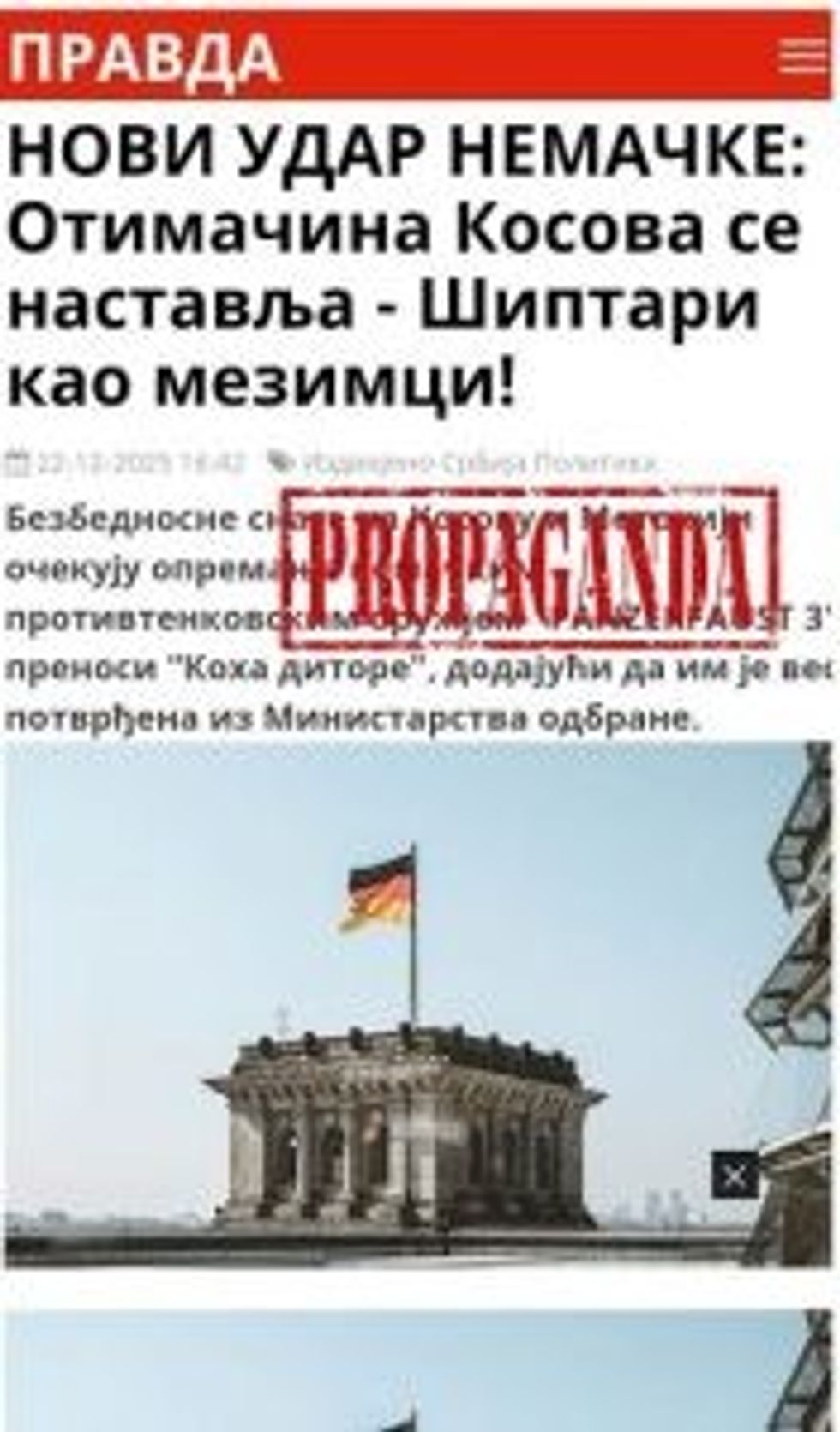
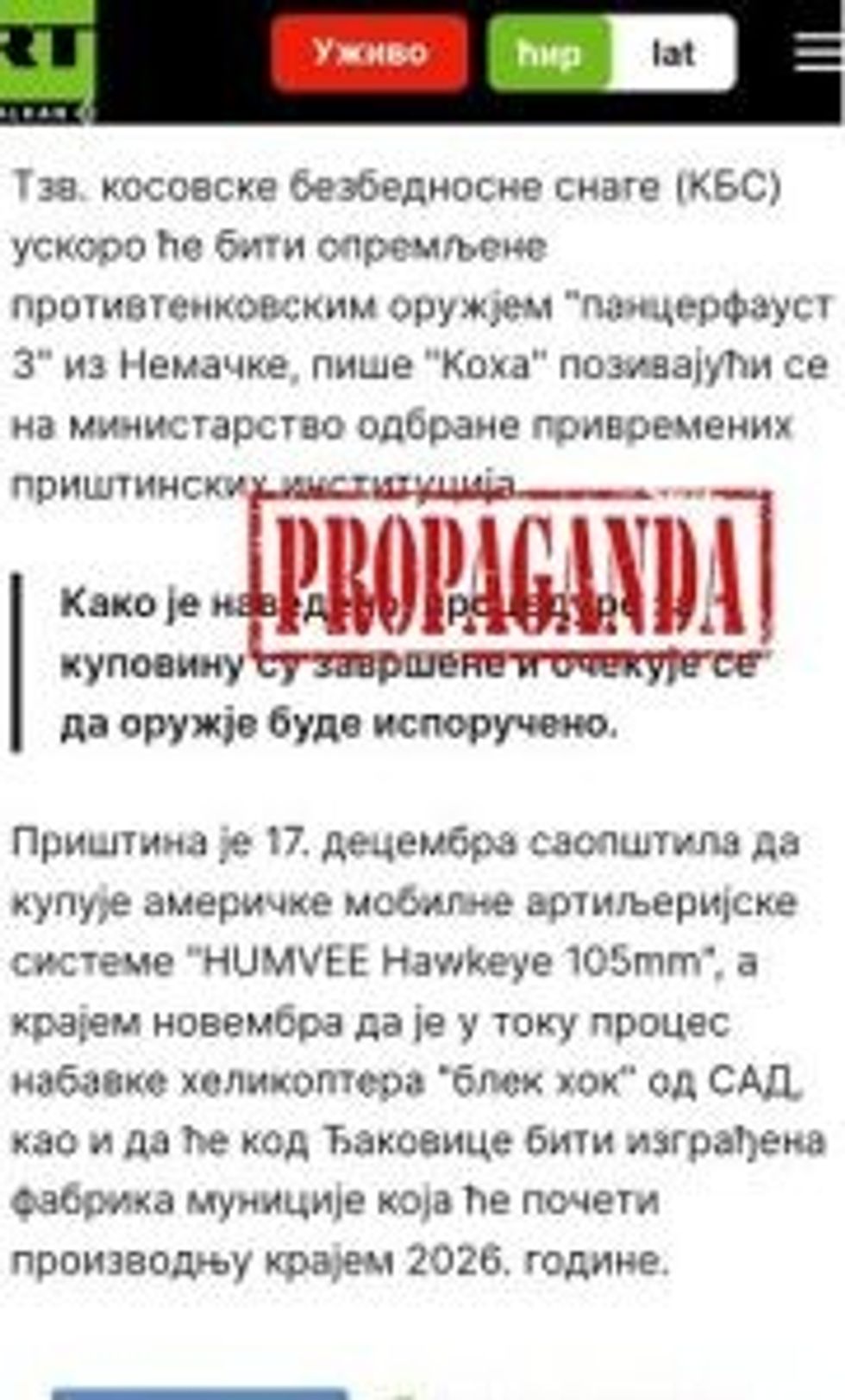
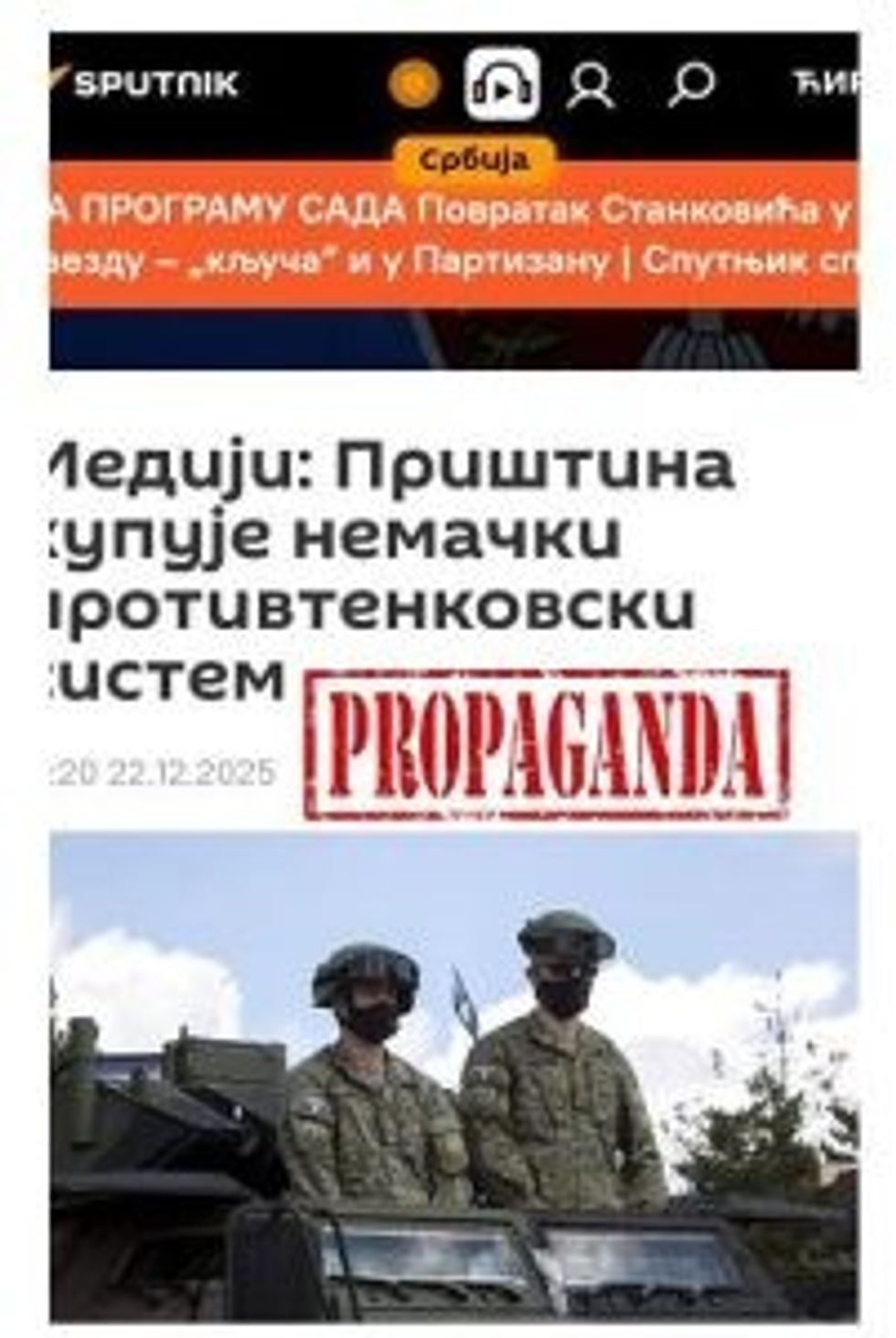
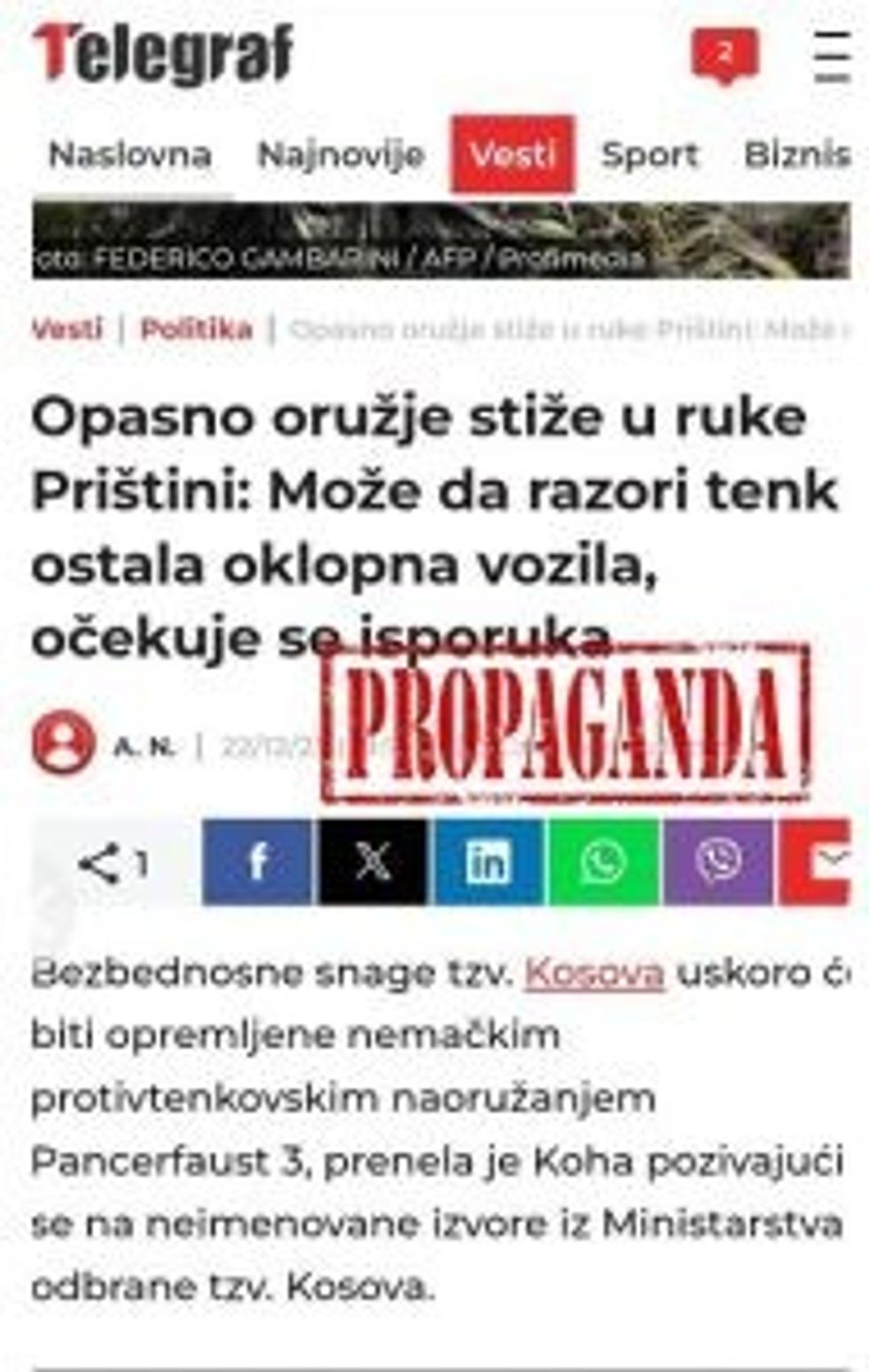
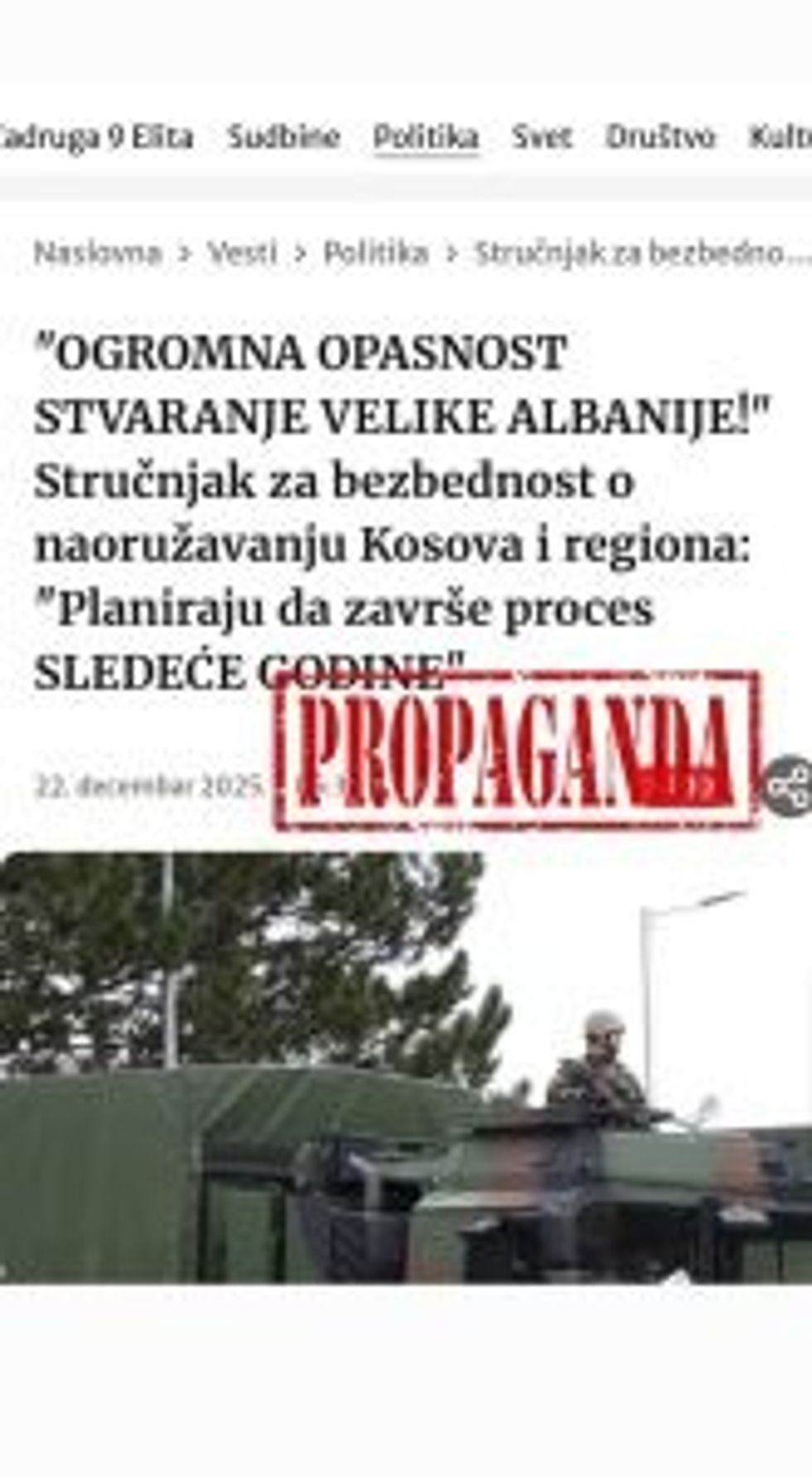
What do the media in Serbia write – Telegraf, Blic, Sputnik Serbia, Pravda, RT Balkan?
In their reporting, media outlets such as Telegraf, Blic, Sputnik Srbija, Pravda, and RT Balkan use sensationalist headlines and language.
Some of them speak of "a new blow from Germany" and "dangerous weapons coming to Pristina," presenting Kosovo's cooperation with Western partners as a destabilizing factor for the region.
While Kosovo, as a sovereign and independent state, continues to strengthen its defense capacities in cooperation with key NATO partners, including Germany, an aggressive media rhetoric has been activated in Serbia that aims to delegitimize this process.
The news of the purchase of the modern anti-tank system "Panzerfaust 3" is presented in the Serbian pro-government media as a false threat to regional peace and stability.
Analysis of headlines in tabloids such as Pravda shows the use of offensive and chauvinistic terms, through which Kosovo's right to make sovereign decisions in the field of security is denied.
Meanwhile, media outlets like Blic and Telegraf talk about "great danger" and "creation of Greater Albania," even though Serbia itself has been massively arming itself with Russia and China for years, as well as deploying military forces near its borders.
Blic goes even further by quoting “security experts” to link the legitimate arming of Kosovo with political narratives and imagined projects. The rhetoric of “pressure on Serbs” serves mainly for internal consumption in Serbia, with the aim of maintaining the narrative of victimization and diverting attention from official Belgrade’s role as an obstacle to peace in the Balkans.
Russian media in Serbia, such as Sputnik Serbia and RT Balkan, have also reported on the same propaganda line regarding the equipping of the Kosovo Security Force with the German anti-tank system.
A particular focus of the Serbian media has been placed on Germany, with headlines presenting Berlin as a “hostile” party. In reality, German support for strengthening Kosovo’s defense capacities is a clear signal that Kosovo’s security is inseparable from Europe’s security.
On the other hand, the media in Kosovo has reported transparently and on an official basis on the completion of the procedures for purchasing anti-tank weapons from Germany for the Kosovo Security Force./TheGeoPost.
Unlike Serbian tabloids, these media outlets have emphasized that this is a legitimate right of Kosovo to strengthen its defense, in accordance with international partnerships.
Essentially, the media campaign in Serbia aims to criminalize Kosovo's right to self-defense, through disinformation and inflammatory language, contrary to reality and international security standards.