The blockade of the Strait of Hormuz was an act of desperation that reflected Tehran's inability to cope with US firepower.
Source: The Telegraph
Translation: Telegrafi.com
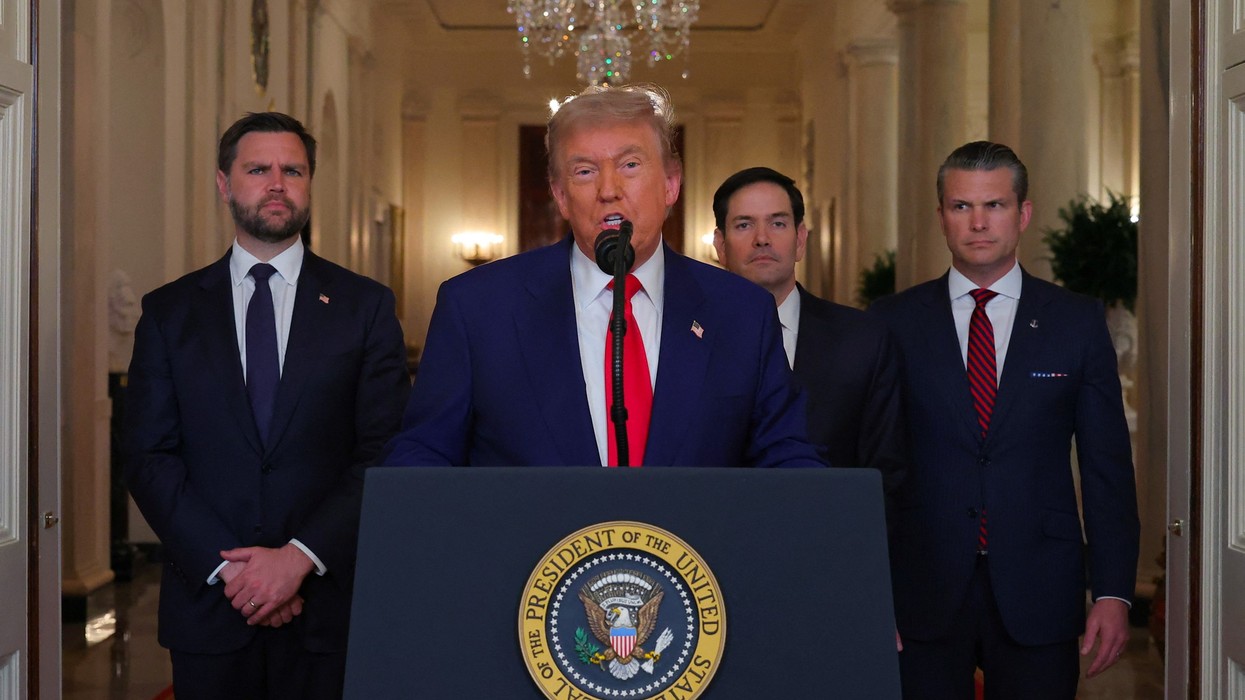
Just because Donald Trump and Iran managed to agree to a two-week ceasefire doesn't mean the war in the Persian Gulf is over. On the contrary, the proposed 10-point peace plan to end the current round of hostilities shows that much work still needs to be done before peace can be restored.
This is especially true of the complex issue of securing passage through the Strait of Hormuz, a critical waterway through which about 20 percent of the world's oil is transported. Today's reports that Iran has once again blocked tankers from passing through the strait are ample proof that this issue is not over yet.
Some are now suggesting that the US president is not concerned about the strait. But Trump made it explicit that forcing Iran to reopen the waterway was his necessary condition for halting military operations. And how do they explain his insistence earlier this week that “an entire civilization will die” if the ayatollahs did not comply with his demands to do so?
But the president's Western critics were determined to declare his military operation a failure almost from the moment it began. Despite Iran's recent maneuvers in the strait, that's perhaps why so-called foreign policy experts are downplaying the possibility that the ayatollahs are terrified of the prospect of Iran suffering devastating attacks targeting critical infrastructure, such as power plants.
There is no doubt that given the relentless destruction Iran has suffered since Trump launched Operation Epic Fury in late February, the Iranians cannot afford active warfare for much longer. With most of its military and nuclear facilities reduced to rubble, Tehran’s only option was to revert to its long-standing practice of holding the rest of the world hostage by closing the Strait of Hormuz.
This is exactly what Iran tried to do in previous conflicts with the US, such as the civil war in Lebanon in the 80s. Tehran's response to superior American firepower was to take dozens of Western civilians hostage - including Britons Terry Waite and John McCarthy - and use them as bargaining chips to force the US to withdraw its forces.
Iran did the same shortly after the 1979 Islamic revolution, when it held 52 American diplomats and civilians hostage for more than a year after storming the US embassy in Tehran. The crisis is considered to have ended the presidency of Jimmy Carter, who was ousted in the following year's election.
It is true that the Iranians have been more innovative this time. But their effective blockade of the Strait of Hormuz has been an act of desperation that has reflected their inability to conventionally confront US firepower. It has also come at great cost to Iran itself, given that it has alienated Gulf states. Countries that once had mixed relations with Tehran may now be clearly in the anti-Iran camp.
Iran has also launched unprovoked attacks on critical infrastructure in Gulf states—a clear violation of international law if ever there was one. But the ayatollahs have never shown much respect for international obligations, whether in terms of providing a full and accurate declaration of their nuclear activities or in their support for Islamist terrorist groups. The Middle Eastern oil kingdoms will not accept Iranian control of the Strait of Hormuz indefinitely, including imposing punitive tariffs on commercial shipping.
Therefore, Trump is unlikely to fall into the same trap as Carter, allowing himself to be held hostage by an exhausted Iran. In any case, the US military – together with its Israeli allies – has already achieved a victory over Iran on the battlefield, a victory that could be extended further if the Iranians prove stubborn in future talks aimed at making the ceasefire permanent. The latest Pentagon analysis shows that Iran has suffered devastating losses on a number of fronts, including 80 percent of its air defenses, the near-total destruction of its naval fleet, and the destruction of its weapons production facilities.
It is truly absurd to suggest, as some Western foreign policy "experts" seem to be doing, that Trump's decision to accept the ceasefire at the last minute represents a capitulation.
With most of the Iranian regime's key leaders either dead or incapacitated by wounds - including, reportedly, Mojtaba Khamenei, the country's new supreme leader - Tehran is now on a survival mission, desperately doing whatever will enable the Islamic Republic to remain in power.
It is now vital that the US and its allies keep up the pressure on Tehran to end the threat to Hormuz and ensure that any peace deal that emerges forces Iran to accept key conditions, such as abandoning its nuclear ambitions. With the threat from Iran's nuclear program one of the main justifications for resuming hostilities, Trump said the US would work closely with Iran to remove the country's "deeply hidden" stockpile of enriched uranium that is essential for building nuclear warheads.
The war with Iran may have powerfully demonstrated America's military dominance, but it has also exposed the internal weakness of Washington's military allies, particularly the United Kingdom, which struggled to mobilize even a single warship, as the economic consequences of the conflict began to be felt more widely.
Rather than supporting the American effort, Sir Keir Starmer and other European leaders made it clear that they were not prepared to become militarily involved in the Persian Gulf until hostilities had ended.
It is time for Britain and its European allies to deliver on their pledge to protect the sea lanes in the Persian Gulf from further acts of Iranian aggression. After all, that is why – or so we are told – Starmer and the Foreign Secretary, Yvette Cooper, have been busy holding so many meetings with Western leaders in recent weeks.
Having so blatantly failed to protect their interests and allies at the height of the conflict with Iran, European leaders should show that they are at least willing to contribute to peacekeeping operations, especially when they involve protecting one of the world's most vital trade routes.
Failure to do so would simply confirm the view, among allies and adversaries alike, that Europeans no longer have any meaningful contribution to make in ensuring global security. /Telegraph/