
Albania is dependent on oil imports, even though it is a hydrocarbon producing country
Albania is an oil producing country and in the past managed to process a part of it in the country, meeting some needs in the market for hydrocarbons.
But during the last three decades, the abuse and mismanagement of this sector has led to the fact that today the country is completely dependent on imports. Citizens are paying for this mismanagement with the high price of oil, which is all imported. This followed the final closure of the main deep processing refinery, which is headed for complete demolition.
Russia's aggression against Ukraine brought a strong shock to the price of oil and gas in international markets that had begun to rise even before the attack. Russia is the third largest oil producer in the world after the United States and Saudi Arabia. The consequences of the price increase have also been felt in Albania, a country that today depends entirely on imports to meet the needs for oil and gasoline. In the past, the country was able to meet part of its fuel needs from the oil extracted in Albania. But the mismanagement and abuse of the privatization process of the country's main refinery has caused that, since 2019, all needs are met by imports.
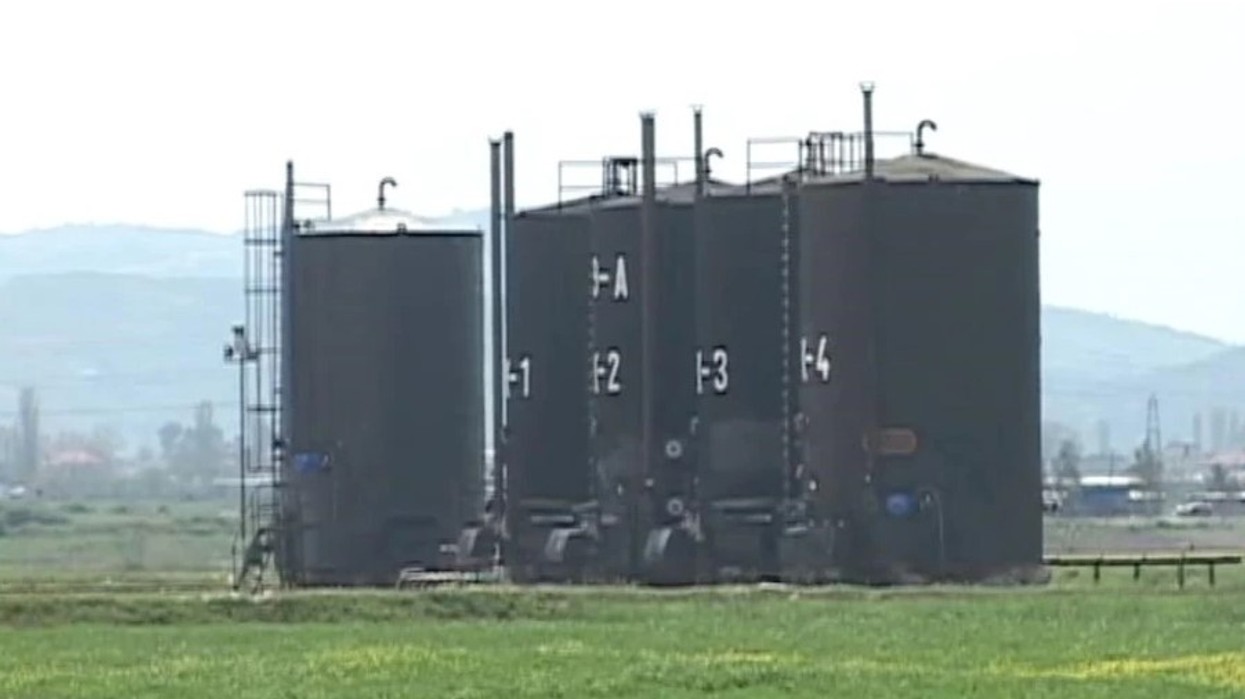
Annual needs are calculated at about 1 million tons per year (of which, 600 thousand tons of oil for vehicles, industry and agriculture, 120 thousand tons of gasoline, and 200 thousand others). Although a producing country, Albania's oil is of the heavy type, not light, that needs deep processing. Over the past 10 years, the average annual crude oil production is estimated at approximately 1 million tons per year. A small part of it is processed locally, mainly for solar bitumen and fuel oil. Both of these by-products are valuable for road infrastructure and as fuel for some industries.
The deep oil processing plant in Ballsh was privatized in 2008 and passed from one owner to another until 2019 when it was finally closed and given for demolition. Its former employees and experts told the Voice of America that all the governments after the 90s stifled this industry, which, if it was working, could meet 30 to 40% of the country's needs for hydrocarbons.
"Hand by hand, this combine was managed by unprofessional people. I did not see only hydrocarbon specialists there. They gave it to some irresponsible people, to some people who had probably seen the oil with their own eyes from afar," Novruz Jahaj, a former employee at the oil refinery in Ballsh, told Voice of America.
"The licenses that were given have passed from hand to hand, they were not real. A name was written and it was not known who was behind it. This work is done by the monopoly of the fuels that are sold in the Republic of Albania," Bardhi Alushaj, a former technologist at the oil refinery in Ballsh, told Voice of America.
"The last ones who left the refinery left a debt not only to the state, taxes, duties, obligations to the municipality of Mallakastra, second-level businesses, but they also owe the oil workers more than 13 salaries," Sokol Dautaj told the Voice of America. Chairman of the Oil Workers' Union.
"If Albanian oil were to be processed in the country, not only would fuel be produced for the economy, but this would translate into well-being for Albanians. They would have the opportunity today, in the conditions of the scarcity of sources of supply, to be more protected, and we would not be dependent on imports" - Nako Petro, former director of the oil refinery, Ballsh.
According to official statistics, the highest amount of oil of 2 million and 500 thousand tons of oil was produced in 1974. Until the 90s, an average of more than 1 million tons per year was saved. Then the production was halved (to 500 thousand tons per year) and kept this quota for two decades. During the last decade, production doubled again.
90% of the oil today is produced by the private company Bankers Petroleum Albania (which uses the largest oil field in the country, that of Patos-Marinzsa) and the rest by several other companies, including the only state-owned company Albpetrol.
Most of the crude oil is exported. The concern of experts is related to the lack of its refining in the country.
This followed the final closure of the Deep Oil Refinery in Ballsh, which was renamed Armo (Albanian Refining Marketing of oil, of which the Fier and Cërrik refineries were also a part, which separated the company from the government in 2008) after the reform of the year '99 in the oil industry in Albania. It was privatized in 2008 by a consortium (Amra Group and Refinery Associates of Texas) with 85% of which was the Albanian businessman Rezart Taçi, with a figure of 128 million euros. 15% of the shares were held by the Ministry of Economy. Year after year, the financial situation of the Armo company worsened, creating losses and debts to the state and other parties. But this did not prevent the then government, in 2012, from announcing the winner of the tender, for the purchase of the state-owned oil extraction company "Albpetrol", the Vetro Energy consortium, which offered 850 million Euros, where the businessman Rezart Taçi appears again. The tender was canceled in early 2013, as the purchase price could not be secured.
Meanwhile, the Ballshi refinery, part of the Armo company, was finally sold by the banks as collateral in 2019 and today it is on the way to complete demolition.
Deputy Energy Minister Ilir Bejtja told the Voice of America that no investment had been made in it since the privatization, the technology did not respond to the times and the amount processed, according to him, was not able to bring profits to the company.
"It is a financial failure. It was a puzzle raised on a bubble, on a nothingness. Debts were regularly capitalized to reach at the end of 2015 $518 million in debt, and $495 million in equity. However, we reached the point where it was no longer profitable to operate the plant, several companies have appeared. Now the bottom line is that it was sold to some iron and steel collecting companies. It will all be dismantled and melted down for steel production. On the same surface, those who bought it, have committed to build a large plot of about 85 hectares, with photovoltaics, energy production from the sun," Ilir Bejtja, Deputy Minister of Infrastructure and Energy, told Voice of America.
Businessman Rezart Taçi, former owner of the Armo company, was declared under investigation by the Special Prosecutor's Office against Corruption and Organized Crime in November of last year. He is charged with the criminal offenses of money laundering in the form of a structured criminal group. There is an arrest warrant against him from the court in absentia. But experts suggest in-depth investigations that also affect, according to them, the initiators of the drafting of agreements that led to the failed privatization of ARMO.
"All three refineries in Fier, in Ballsh and in Cërrik are crime zones, I say, so there should be a tape "a crime happened here" by SPAK most recently, to see who were the people who decided that in Ballsh and Fier it should have been Azeri companies, for example, or other companies that never managed to manage it. They are indeed privatized by law. Today it is very difficult to find the culprits because this is called legal corruption. This is the origin of what is happening, when we don't have a hydrocarbon market, we don't have a company to produce and sell domestically, we don't have a refinery to refine oil that is a national asset in the country, and we don't even have an enterprise to distribute this produced unit" - said Bardhi Sejdarasi, an expert on economic issues, for the Voice of America.
Today, Albania is paying all the consequences of 30 years of mismanagement in the hydrocarbon sector. The average price of oil during the last week is calculated at around 240 ALL per liter, having increased by nearly 30% since the beginning of the Russian aggression on Ukraine more than a month ago./VOA